The Galaxy Z Fold3 might look like this. (Source: Twitter)
The next generation of Samsung's flexible premium phablet is likely to be called the Galaxy Z Fold3. The leaker Ben Geskin has produced new images to show how this device might look according to the latest leaks and rumors. They point to it having rear cameras like those of the Galaxy S21 Ultra, although the rest is much unchanged compared to 2020.
Samsung is currently rumored to expand its foldable offerings in 2021, as it would reportedly like to stay ahead in this field rather than be overtaken by rumored new entries from other companies that might range from Xiaomi to Apple. They may take on new versions of the Galaxy Z Fold series, which, according to Ben Geskin, will take on their maker's latest premium design language.
This involves an enlarged, frame-hugging camera hump quite like that found on the new S21 Ultra candy-bar flagship. It suggests Geskin thinks (or may have heard) the Galaxy Z Fold3 will get the same elaborate imaging system, 108MP main shooter, laser autofocus and all.
The new image mirrors earlier indications that Samsung's other type of foldable, the Galaxy Z Flip, will upgrade to vanilla S21 cameras in its own new iteration. Otherwise, the "new Z Fold" may look more or less like its predecessor, with a secondary screen that dominates one whole "leaf" of the rear panel and a main folding display of at least 7.6 inches in diagonal length.
One or both of these panels are rumored to have Samsung's first under-display selfie cameras (or UDCs) instead of central punch-holes, which may be why Geskin's new render includes no hint of front-facing shooters. Finally, the leaker refers to this concept as the "Galaxy Z Fold 3 Ultra", which hints at a new (and probably especially expensive) tier for this line of foldables in 2021.
There is little other evidence that Samsung really plans to augment the Z Fold line in this way in 2021. On the other hand, it might also release up to 4 new foldables this year, some of which are said to be "more affordable". However, they might now wind up being cheaper only when compared to this putative Z Fold3 Ultra.
The new hypothetical top-end phone could also be the only one with S Pen support, as Geskin has popped one into his latest image. Then again, he also predicts there will be no Galaxy Note-esque silo in the foldable, and that the stylus might just clip onto it as it does in the Galaxy Tab S7/S7+. Then again, there is no sign of any kind of corresponding magnetic attachment strip in the image.
The 5G smartphone market is about to blow up in 2021. Apple supplier Murata estimates that sales of 5G smartphones could exceed 500 million units in the new year compared to 300 million units in 2020. Market research firm Strategy Analytics has a more aggressive forecast -- predicting a 150% jump in 5G smartphone sales this year from 2020's estimated shipments of 250 million units.
Qorvo(NASDAQ:QRVO) offers one path for investors to take advantage of this huge jump in 5G smartphone sales. The chipmaker supplies radio-frequency chips to several major smartphone OEMs (original equipment manufacturers). Not surprisingly, Qorvo's revenue and earnings have accelerated big time lately -- a trend that's likely to continue when the chipmaker releases its fiscal 2021 third-quarter results on Feb. 3. Here's what to expect.
Image source: Getty Images.
Qorvo is about to deliver big gains once again
Analysts expect Qorvo to deliver non-GAAP earnings of $2.66 per share on revenue of $1.06 billion for the December quarter. These estimates are in line with management's guidance and well ahead of the year-ago period's $1.86 in earnings per share and $869 million of revenue.
But don't be surprised to see the company blast past its own expectations. That's because Apple, which reportedly accounts for a third of Qorvo's sales, has potentially scaled its iPhone production in the final calendar quarter of 2020. Supply chain checks carried out by Wedbush Securities analyst Daniel Ives suggest Apple could have built close to 90 million iPhones in the fourth quarter, up from his original estimate of 65 million to 70 million units from Sept. 2020.
Such an impressive jump in iPhone production through the quarter doesn't seem surprising as demand for the iPhone 12 is very strong. After all, it didn't take much time for the device to become the best-selling 5G smartphone globally, so Apple alone could give Qorvo a nice lift and help it outperform Wall Street estimates when the company releases its results this week.
The party is just getting started
Analysts believe Qorvo will be able to sustain its high growth rate with the top line growing 19% year over year in the fiscal fourth quarter, while earnings increase 27% to $2.00 per share.
However, there's a strong possibility of Qorvo exceeding those estimates. Cowen analysts estimate Apple could ramp up its March quarter iPhone builds to 55 million units, up 49% year over year. Wedbush has an even more aggressive forecast, estimating iPhone builds between 60 million and 70 million units in the current quarter. What's more, the momentum is expected to spill over into the second quarter of the calendar year as well with Apple expected to make at least 40 million iPhone units.
All of this bodes well for Qorvo given its close relationship with the tech giant. However, the chipmaker is sitting on additional growth drivers such as Samsung's recently launched Galaxy S21 flagship. Qorvo has been a longtime supplier of RF chips to Samsung's Galaxy line of smartphones, including Galaxy S20 devices last year, and it's likely to have retained its spot in the new release.
That's because Samsung's Galaxy S21 Ultra comes equipped with WiFi 6E connectivity, and Qorvo had indicated on its last earnings call that it's "actively supporting leading OEMs in the design of 6E platforms." Counterpoint Research estimates Galaxy S21 shipments could surpass those of the Galaxy S20 by the middle of this year. That wouldn't be surprising as Samsung has slashed the base prices of the Galaxy S21 models by $200 compared to the previous S20 lineup.
Qorvo can ride the success of its mobile customers and maintain its impressive growth rate. More importantly, investors shouldn't forget the 5G smartphone market still has a lot of growth to offer as shipments may hit 1.5 billion units by 2025. In this environment, Qorvo can remain a top 5G play long term, and a strong showing in the upcoming earnings report should give investors the right push to buy the stock.
All but two US states — Montana and Wyoming— now have police or fire departments participating in Amazon’s Ring network, which lets law enforcement ask users for footage from their Ring security cameras to assist with investigations, the Financial Times reported, Figures from Ring show more than 1,189 departments joined the program in 2020 for a total of 2,014. That’s up sharply from 703 departments in 2019 and just 40 in 2018.
The FT reports that local law enforcement departments on the platform asked for Ring videos for a total of more than 22,335 incidents in 2020. The disclosure data from Ring also shows that law enforcement made some 1,900 requests — such as subpoenas, search warrants, and court orders— for footage or data from Ring cameras even after the device owner has denied the request. Amazon complied with such requests 57 percent of the time, its figures show, down from 68 percent in 2019.
Privacy advocates have raised concerns about how Ring data is used by and made available to law enforcement. Ring’s Neighbors app, which allows Ring users to share videos with others nearby has been criticized for containing racist comments and reports. And a report from NBC News last February found that Ring footage wasn’t all that helpful for solving crimes. When it was useful, the Ring footage was mostly used for low-level non-violent property crimes (like the theft of a Nintendo Switch).
Article From & Read More ( Amazon’s Ring now reportedly partners with more than 2,000 US police and fire departments - The Verge )
https://ift.tt/39Ask7m
Technology
The next big update coming to iPhones around the world will almost certainly be called iOS 15, and we expect to hear all about it at the company's WWDC 2021 conference expected to take place in June this year.
Little is known about iOS 15, but a number of rumors have given us a suggestion of whether your iPhone will be able to download the latest software when it lands - and it differs to iOS 14 compatibility.
Every phone that was capable of downloading iOS 13 was also compatible with the latest iOS 14 software that landed in 2020 before the iPhone 12 series was unveiled. iOS 14.4 is the latest upgrade, and that was made available before the end of January 2021.
But what's the latest we know about iOS 15? We've taken a look at the biggest rumors so far to give you our best knowledge on whether your phone will be upgraded.
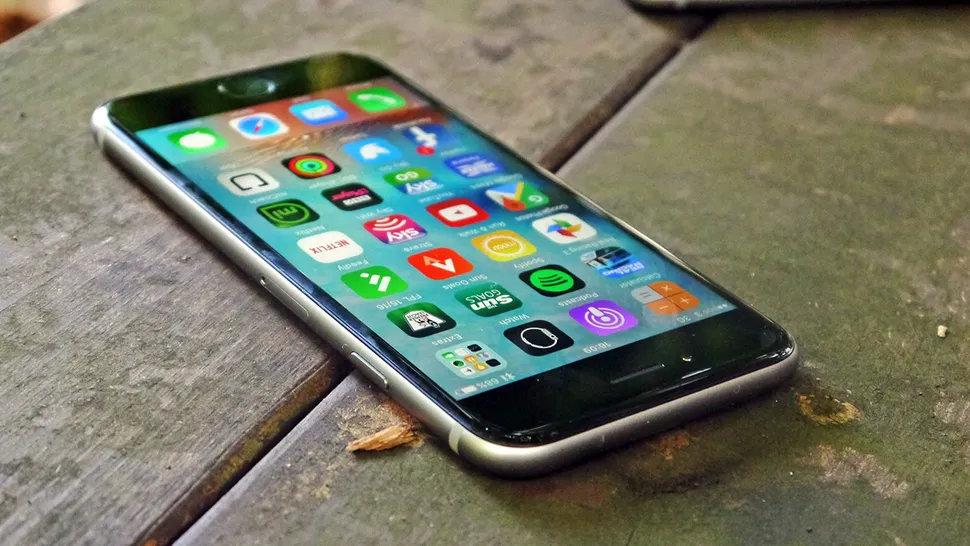
iPhone 6S, iPhone 6S Plus and iPhone SE (2016)
(Image credit: Future)
If you own the iPhone 6S, iPhone 6S Plus or original iPhone SE, you're unlikely to be able to upgrade to iOS 15. That's the harsh truth, and while it isn't yet confirmed we've heard this from at least twosources now.
The iOS 14 upgrade was available on these three devices, but that in itself wasn't expected as many had anticipated Apple would drop support for those devices in its 2020 upgrade.
While this isn't confirmed, it would make sense for Apple to drop support for these older devices as they'll all be over five years old by the time iOS 15 lands and some are even older than that.
The switch to iOS 15 won't mean your phone is useless, but if you're looking for the latest features and security updates you'll want to switch to a more modern smartphone from Apple or an alternative.
iPad Air 2, iPad (2017) and iPad mini 4
The iPad mini 4(Image credit: TechRadar)
It's also likely these three iPad models won't be able to download iOS 15, or more accurately the company's offshoot software that's likely to be called iPadOS 15, when it lands.
We've yet to hear this specifically from any key sources, but it would make sense for the company to drop the next-gen of its devices from the iOS 15 update so keep an eye out when the iOS 15 details land.
iPhone 7 and beyond
Own an iPhone 7 or a smartphone from Apple released after 2017? It's likely you'll still be supported by iOS 15. There's no gurantee of that at the moment, and we'll have to wait for official confirmation from Apple before we know that for certain.
All of the leaks so far have suggested iOS 15 will be coming to all devices that are older than the iPhone 7 series though so we're inclined to agree with those sources and hopefully it'll be positive news for you.
This is the Hyundai Veloster N ETCR, an electric racing car being developed for a new EV touring car category.
LAT Images
The Veloster N ETCR conducted some demonstration laps at Daytona International Speedway in Daytona, Florida, the day before the Rolex 24 endurance race.
LAT Images
Marcelo Lotti, World Sporting Consulting president, with IMSA President John Doonan and the Hyundai ETCR.
LAT Images
The annual 24-hour race at Daytona International Speedway in Florida got underway on Saturday afternoon. And this year's race has been a pretty good one so far—although there are still nearly seven hours left to run as I write this. This year is the 59th running of a race that has become, unofficially at least, the start of the year's racing season for many. But on Friday, the 3.5-mile (5.6km) road course tried something new, when an electric racing car took to the track for some demonstration laps—the first time a racing EV has done so. With any luck, it may be a herald of things to come as the sport's organizers explore the potential for a US series in the next few years.
This wasn't a single-seater with open wheels like the cars that race in Formula E. Instead, it was designed for a new category called ETCR, for electric touring cars: think heavily modified road-going cars but with electric powertrains. In this case, that road-going car was a Hyundai Veloster N. Hyundai has been contesting the (not electric) TCR category with the Veloster N, but those all feature 2.0L internal combustion engines driving the front wheels.
The ETCR rulebook is much less restrictive, and as a result, the Veloster N ETCR is a much more exotic thing, with not one but four electric motors paired up so that each rear wheel is powered by a pair of motors. Peak power is an impressive 670hp (500kW)—as much as the new hybrid prototypes that will race at Le Mans from this year—drawing energy from a 68kWh battery pack sourced from Williams Advanced Engineering (which is also supplying Formula E with batteries for that series' third-generation car).
That makes it a challenging car to drive fast, according to Augusto Farfus, a professional racing driver who's working with Hyundai to develop the Veloster N ETCR car and who drove the demo laps at Daytona on Friday.
"The biggest difference is the noise, of course; we drive a car which is pretty much entirely silent. You can just hear the tires. And for me the biggest difference, besides the weight of the car—you get used to it fairly quickly—is the two rear wheels, which are not connected by anything. So we have four motors, two on the left rear and two on the right rear, but there is no rear differential like you would have in a normal race car," Farfus told Ars.
"It's a new challenge for the driver, because every single variation that you have on brake application, on the balance of the car on the brakes, becomes a major problem. You don't have engine braking, which overcomes some of these issues in a normal combustion car. So for me, this is the biggest difference. You approach the corners extremely fast, because 500 kilowatts does accelerate the car fairly quick, so you end up approaching a corner in complete silence, and super fast," Farfus said.
ETCR races promise to be action-packed, too, with short (6.2 miles/10km) sprint races planned for the Pure ETCR series that's due to get underway in Europe later this year. "You have to drive the car pretty hard. There is no energy management for the moment—there is no lift and coast or saving energy like we see in different electric formulas. So, this puts an extra pressure on the drivers and the engineers, because we have to develop a real race car with a real sprint spirit of attacking every, every lap," Farfus told me.
When Pure ETCR starts this year, the Veloster N ETCR will be joined by EV racers from three other makes: Seat, Alfa Romeo, and MG. IMSA, the organization that sanctions the Rolex 24 at Daytona (and top-level sports car racing in the US) isn't quite ready to announce a North American ETCR series, but IMSA President John Doonan sounded optimistic when asked about the prospects of such a thing happening.
"We want to be the platform. We want to be the opportunity in markets that make the most sense for the manufacturer partners so that the work that Marcelo [Lotti, president of World Sporting Consulting and the driving force behind both TCR and ETCR] and his team have done to get this to become reality is step one. Now, it's our responsibility to work with our existing manufacturers to see what they would like to do to leverage the opportunity," Doonan said.
"We're excited and honored to have this be the first time that a fully electric race car will have taken a demonstration lap—certainly not in competition, but we're thrilled to be part of this today. When an automaker utilizes one of our platforms to tell a story from a marketing standpoint, or from a new technology standpoint, that's right up our overall company strategy," Doonan told Ars.
Apple quietly added a new iMessage security feature in iOS 14 called BlastDoor.
BlastDoor is a new sandbox inside iMessage that receives and sanitizes all iMessage content before it’s shown to the user.
The security feature will prevent attacks via iMessage that might include malicious code for spying on iPhones.
One of the most important apps on any phone, regardless of model or operating system, is the messaging app. The chances are most people use a collection of texting apps to keep in touch with friends and family. These apps have grown to be highly sophisticated over the years, offering a collection of advanced features to improve the chat experience. Whether it’s iMessage on an iPhone, Google Messages on Android, or WhatsApp, Signal, Telegram, and many others on both platforms, these apps offer essentially the same features. Many protect chats with end-to-end encryption, and most of them support rich texting features, file-sharing, emojis, voice messaging, voice calling, and integration with many other apps.
But because texting is so popular on smartphones, it’s also a great gateway for hackers who come up with all sorts of malicious attacks that can spread via chat apps. And Apple has been quietly tackling that very problem, a new report shows. The company added an amazing new feature to iMessage in iOS 14 and iPadOS 14, the kind that we’ll never notice. It’s called BlasstDoor, an apt name for what the feature is supposed to do.
When Tony Stark asks his AI Friday to activate the “Armed Door” protocol in Endgame, a shield of armor envelops the Avengers headquarters. That’s because they’re about to attempt something never done before, which could lead to a huge wave of destruction. There’s no guarantee that the armor will actually hold back a potential blast, but Stark is trying it nonetheless. Marvel fans will surely remember the scene, while others won’t know what any of this means.
The gist with BlastDoor is similar. Everything coming in via iMessage goes through a secure location meant to contain threats that hackers might include in messages. Highly sophisticated information bombs can allow hackers to attack unsuspecting iPhone users, but BlastDoor will now stop all of that. The new security feature is amazing, and it’s something other operating systems and chat apps will undoubtedly copy. After all, hackers target all devices and programs, not just Apple’s.
As to why Apple never mentioned anything about BlastDoor during WWDC 2020 when the first final version of iOS 14 shipped, that’s understandable. This is Apple’s new move in an ongoing security battle with attackers. There’s no point showing your hand when it comes to BlastDoor. It’s not a feature that device owners will actively use or that iOS developers needed to be aware of. It’s all supposed to work passively in the background, keeping everybody safe. If security experts like the people working over at Google Zero Lab discover it, that’s something else — and hackers could also find it once they realize their weaponized messages aren’t delivering the desired effect.
Last year, a report showed that hackers targeted journalists via iMessage code that enabled spying without the recipient having to do anything. But the issue was fixed in iOS 14, so Google researcher Samuel Groß set out to discover how Apple mitigated the problem. That’s how he found BlastDoor, a feature that works behind the scenes with iMessage content. It’s a “sandbox” type of functionality, similar to other sandboxes in iOS. BlastDoor will unpack and process the content of all incoming messages in an isolated environment so that a malicious payload cannot attack the operating system. In other words, every attachment and all code coming through iMessage, whether it’s the actual text, links, or files, will be sanitized inside that closed environment.
If you still haven’t upgraded to iOS 14, BlastDoor is an excellent reason to do it, especially if you’re the kind of iPhone user who might be someone’s target.
“Overall, these changes are probably very close to the best that could’ve been done given the need for backwards compatibility, and they should have a significant impact on the security of iMessage and the platform as a whole,” the Googler wrote. “It’s great to see Apple putting aside the resources for these kinds of large refactorings to improve end users’ security. Furthermore, these changes also highlight the value of offensive security work: not just single bugs were fixed, but instead structural improvements were made based on insights gained from exploit development work.”
Groß’s blog post detailing the new iMessage security feature is available at this link.
Chris Smith started writing about gadgets as a hobby, and before he knew it he was sharing his views on tech stuff with readers around the world. Whenever he's not writing about gadgets he miserably fails to stay away from them, although he desperately tries. But that's not necessarily a bad thing.
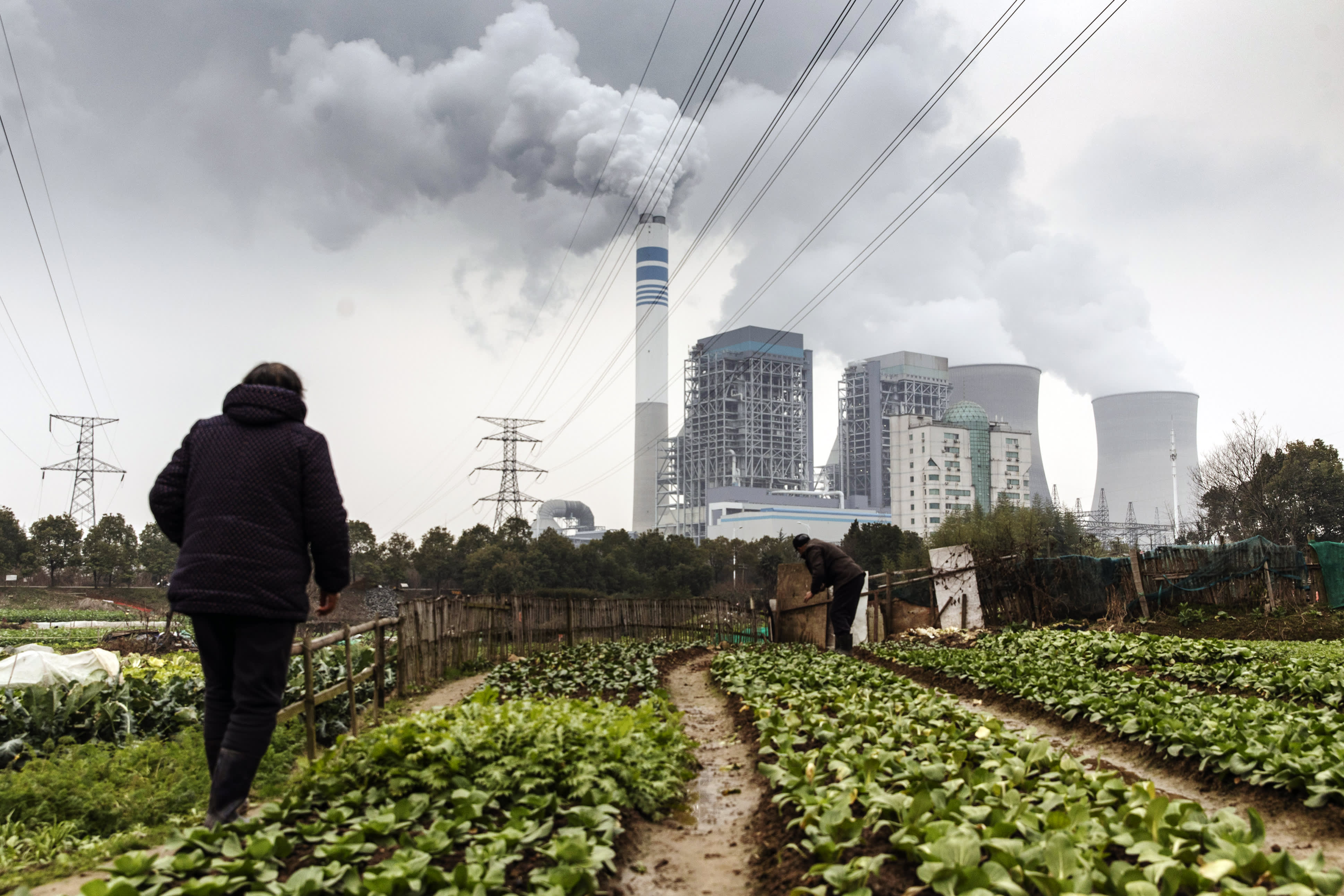
People tend to vegetables growing in a field as emission rises from cooling towers at a coal-fired power station in Tongling, Anhui province, China, on Wednesday, Jan. 16, 2019.
Bloomberg
Elon Musk is going to pay $100 million towards a prize to come up with the best carbon capture technology. (Or so he tweets. Details are scarce so far.)
The maverick tech CEO's promise is not particularly notable for its generosity. With a net worth over $200 billion, $100 million is 0.05% of Musk's wealth.
But still, the richest person in the world's tweet brings attention to an often overlooked technology which has been around since the 1970s, but has mostly been relegated to niche corners of the energy community.
"Mr. Musk's announcement reflects a maturation in the private sector around climate change and investment," Julio Friedmann, a senior research scholar at the Center on Global Energy Policy at Columbia University, tells CNBC via email. "As in the past, Mr. Musk's announcement has shaken up the gumball machine."
Why not just plant more trees?
One popular reaction to Musk's tweet was that he would be better to spend his money planting trees. Trees, like other plants, consume carbon dioxide in the process of photosynthesis and release oxygen. There is an international initiative, 1t.org, which aims to restore and grow one trillion trees by 2030 to mitigate climate change. The trillion trees campaign is run by the World Economic Forum and funded by the Marc R. Benioff Foundation, an eponymous philanthropic effort funded by the billionaire Salesforce CEO.
"Addressing climate change will require investment in technologies that help to limit future emissions, such as electric vehicles, and also the drawdown of carbon from the atmosphere. Nature based solutions can help with both of these, but we will need thousands of solutions in combination," says Tom Crowther, a tenure-track professor of Global Ecosystem Ecology at ETH Zürich and the chief scientific advisor to the United Nation's Trillion Tree Campaign. "There is huge potential for direct carbon capture technology as part of a diverse climate plan," Crowther tells CNBC from Switzerland via email.
So does Musk. In response to one tweet recommending tree-planting, Musk said trees "are part of the solution, but require lots of fresh water & land. We may need something that's ultra-large-scale industrial in 10 to 20 years."
Carbon capture from factory emissions: Where it stands
There are currently 21 large-scale CCUS commercial projects around the globe where carbon dioxide is taken out of factory emissions, according to the International Energy Agency, a Paris-based intergovernmental energy organization. The first one was set up in 1972.
It wasn't until the 1980s that carbon capture technology was studied for climate mitigation efforts, but even then, it was "mainly lone wolves," Herzog says. By the 1990s "activity really ramped up," he says.
One part of the carbon capture project at Archer Daniels Midland Company in Decatur, Illinois.
Photo courtesy Archer Daniels Midland Company
For factory carbon-capture, emissions are routed through a vessel with a liquid solvent which essentially absorbs the carbon dioxide. From there, the solvent has to be heated up in a second tower — called a "stripper" or "regenerator" — to remove the CO2, where it's then routed for underground storage. The solvent can then be re-used in the first vessel or tower, Herzog says.
If the storing is done carefully, "you should be okay," Herzog says. "We don't have experience on the scale we want to go to," Herzog says, "but we've demonstrated you could do it correctly."
The U.S. Department of Energy is on the case, "developing models that simulate the flow of stored carbon dioxide, to help understand and predict chemical changes and effects of increased pressure that may occur."
Carbon capture from the air: Where it stands
In terms of reversing global climate change, there's already been too much carbon released into the atmosphere for us not to try and capture carbon and store it, says Klaus Lackner, the director of Center for Negative Carbon Emissions and professor at Arizona State University.
"The question of whether you want to store or not to store [carbon] was a very good question in 1980," Lackner tells CNBC. "But you needed to have this discussion 30, 40 years ago because back then you still had a chance to stop the train before we collide with something."
The concentration of carbon dioxide in the atmosphere is tracked as in parts per million, or PPM. As of December, atmospheric carbon dioxide stands at 414.02 ppm, according to the National Oceanic and Atmospheric Administration.
"We started the industrial revolution with 280 parts per million in the atmosphere," Lackner tells CNBC. "By now we have 415 [ppm], and we are going up 2.5 ppm a year at this moment." The consequences of that rising carbon dioxide in the atmosphere are already dire and will get worse. "The oceans have started to rise, hurricanes have gotten way worse, climate has become more extreme, and this will only get worse over the next decade," Lackner says.
The only choice, Lackner says, is to "draw down" the atmospheric carbon dioxide — or to suffer unknown, devastating consequences.
Capturing carbon from the air, not from a factory smokestack, is called "direct air capture," and there are currently 15 direct air capture plants in Europe, the United States and Canada, according to the IEA. "Carbon removal is expected to play a key role in the transition to a net-zero energy system," the IEA says, but currently it is a very expensive technology.
Direct air capture is "very expensive because the CO2 in the atmosphere is only .04%," Herzog tells CNBC, and the technical process of removing carbon dioxide from a gas gets more expensive the lower the concentration of the carbon dioxide gets. "But it is very seductive. A lot of people jumped on this," he says.
Lackner sees it as a necessity. "In the end I see CO2 as a waste management problem. We have for two centuries simply dumped the waste from energy production — which is carbon dioxide — in the atmosphere and not thought about it any further, and we are gradually waking up to the fact that that's not acceptable," Lackner says.
The future of carbon capture technology
The technology exists to capture carbon and there is a grave need for climate change to be mitigated. So why isn't it being used everywhere already?
The problem is economics, says Herzog. "It's cheaper to put [carbon dioxide] in the atmosphere. It is cheaper to let it go up the smokestack then put this chemical plant on the back of the smokestack to remove it," Herzog says. "Who is going to pay for that?"
To change that reality, there must be economic costs to releasing carbon dioxide pollution into the atmosphere.
"The best capture technology will reduce these costs, but it will never be zero. Hence, even the best carbon capture technology will be useless if the world is not willing to put a price on carbon," Berend Smit, a Professor of Chemical and Biomolecular Engineering at the Department of Chemical and Biomolecular Engineering, at the University of California, Berkeley, tells CNBC by email. His research focuses on finding the optimal material for carbon capture.
In the meantime, scientists and researchers are working to make current carbon capture technologies better.
"Over the past 10 years, there are a number of innovations and improvements to enable us to save more energy and cost up to 70% less for new carbon capture processes," Paitoon (P.T.) Tontiwachwuthikul, a professor of industrial and process systems engineering at the Canadian Academy of Engineering and a co-founder of the Clean Energy Technologies Research Institute University of Regina, tells CNBC by email. "These include novel solvents (and their mixtures) as well as new process hardware items (e.g. new columns, catalysts, etc.)."
Smit is also working on how to use a kind of sponge "with a strong affinity for carbon dioxide," he says. "Hence if we flow air through the sponge, the CO2 gets removed. One the material is saturated with CO2, we need to heat it, pure CO2 comes out, which we can then store. The sponge is empty and we can start over again."
An artist's impression of a mechanical tree farm.
Image courtesy Silicon Kingdom Holdings Ltd.
Lackner has developed a free-standing device to take carbon dioxide out of the air. "Everybody's machine out there right now, they are sucking carbon dioxide or pushing carbon dioxide with fans and blowers ... we think that the wind alone is good enough to move the air around and our design aims to just be passively standing in the wind, just like a tree." While the technology has been demonstrated on campus, it's still in its infancy.
Fundamentally, it all comes down to money. "You need regulatory frameworks where basically, if you want to dig up carbon, you better show that you put an equal amount away," Lackner says. "If you have a cheaper way by all means do it first. if you don't have a cheaper way, you have no excuse because this one will work."
Article From & Read More ( Carbon capture technology has been around for decades — here's why it hasn't taken off - CNBC )
https://ift.tt/36te1zk
Technology
In many areas of the United States, installing a wind or solar farm is now cheaper than simply buying fuel for an existing fossil fuel-based generator. And that's dramatically changing the electricity market in the US and requiring a lot of people to update prior predictions. That's motivated a group of researchers to take a new look at the costs and challenges of getting the entire US to carbon neutrality.
By building a model of the energy market for the entire US, the researchers explored what it will take to get the country to the point where its energy use had no net emissions in 2050—and they even looked at a scenario where emissions are negative. They found that, as you'd expect, the costs drop dramatically—to less than 1 percent of the GDP, even before counting the costs avoided by preventing the worst impacts of climate change. And, as an added bonus, we would pay less for our power.
But the modeling also suggests that this end result will have some rather unusual features; we'll need carbon capture, but it won't be attached to power plants, for one example.
Model all the things
Decent models of the future energy economy are complex. They typically involve breaking the grid down by region and simulating typical demand by using historic data, often scaled to represent increased demand. They'll then try to meet that demand using different energy sources, subject to a set of applied constraints. So, in this case, one of the constraints would obviously be limiting carbon emissions. The model then iterates over possible ways of meeting both the demand and constraints in the most economical way possible, identifying an optimal solution.
In this case, the researchers set up a series of eight scenarios which applied different constraints. These include things like continuing current trends into the future, a scenario where fossil fuel prices are low, and one that simply identifies the cheapest carbon-neutral pathway. Other variations include an all-renewable grid and high levels of efficiency technology, another where the land given over to energy production is constrained, and one where the United States manages to reach negative net emissions.
The US uses fossil fuels for a lot of things beyond electrical generation, and shifting these to emissions-free options are also part of the model. These include things like switching vehicles and heating to electrical options and altering industrial processes where possible. Carbon capture is deployed as needed to reach emissions goals.
One of the things that's immediately apparent from running the business-as-usual model is how much already changes thanks to the price drops in wind and solar. In this scenario, carbon emissions will drop by 22 percent, largely due to the displacement of coal use. It's worthwhile knowing, as any proposals for a target in that area can be dismissed as irrelevant. Another thing that is clear is that decarbonizing the energy system doesn't mean the US will eliminate greenhouse gas emissions. The noncarbon greenhouse gasses will still provide the equivalent of 500 metric megatons of carbon dioxide.
Efficiency and beyond
One of the things the research has made clear is that efficiency will be absolutely necessary for reaching emissions targets. By 2050, rising population and GDP should boost energy demand in the absence of efficiency. But, to get to carbon neutrality, we'll have to keep energy use roughly equal to our present levels. Some efficiency will occur simply because electrical vehicles and heating systems are inherently more efficient. But it's clear that we'll need quite a bit beyond that, since the research team estimates that per-capita energy use has to decline by about 40 percent in the next 30 years to reach carbon neutrality.
While energy use may stay level, the increased electrification of homes and vehicles will mean that we'll need significant increases in generating capacity. The typical scenario would involve about 3.2 terawatts of new capacity, almost all of it in the form of wind and solar power.
The good news is that doing this is relatively cheap. The researchers estimate that the net cost of the transformation will be a total of $145 billion by 2050, which works out to be less than a half-percent of the GDP that year. That figure does include the increased savings from electrical heating and vehicles, which offset some of their costs. But it doesn't include the reduced costs from climate change or lower health care spending due to reduced fossil fuel use. These savings will be substantial, and they will almost certainly go well beyond offsetting the cost.
Due to the reduced cost of renewable generation, the authors project that we'll spend less for electricity overall, as well.
The most expensive scenarios raise the cost to about 1 percent of the 2050 GDP. Notably, going to net negative emissions is not the most expensive; instead, limiting land use cuts down on the amount of renewable energy that could be deployed, raising costs.
Part of the reason it is so cheap is because reaching the goal doesn't require replacing viable hardware. Everything that needs to be taken out of service, from coal-fired generators to gas hot-water heaters, have finite lifetimes. The researchers calculate that simply replacing everything with renewables or high-efficiency electric versions will manage the transition in sufficient time.
Not what you might expect
Many takes on a carbon-neutral grid assume periods of low solar and wind production will be smoothed over with gas generators using carbon capture and storage. But this analysis suggests that any remaining gas plants simply won't run often enough to provide an economic justification for the carbon-capture hardware. Similar things are true with batteries; the periods when demand outstrips capacity are expected to be so rare that it doesn't make economic sense to build that many batteries to cover them.
Instead, gas plants will simply dump their carbon emissions into the sky. This ends up being carbon neutral because we'll still need some liquid fuels for things like air travel, and we'll make these with carbon pulled back out of the atmosphere, combined with hydrogen produced from water during periods of excess renewable supply. The researchers estimate that we'd require 3,500 terawatts just to make enough hydrogen—roughly the same amount of electricity we make currently.
“Until recently, it was unclear whether variable renewable energy, nuclear, or fossil fuel with carbon capture and storage would become the main form of generation in a decarbonized electricity system... The cost decline of variable renewable energy over the last few years, however, has definitively changed the situation.”
The scenarios with additional constraints produce some odd results as well. The only scenario in which nuclear power makes economic sense is the one in which land use is limited. This also drives more wind offshore and relies on fossil fuel plants with carbon capture. Not surprisingly, this turns out to be the most expensive situation the researchers looked at. Carbon capture, along with enhanced biomass use for power, also featurs prominently in a scenario where the shift to electric vehicles and appliances is delayed.
Going entirely renewable actually forces much higher levels of carbon capture to ensure that fuel needs could be met without any fossil fuels. And going net negative involves a variety of carbon capture and biofuels, with substantial land use as a result of the latter.
Everything has changed
To an extent, the researchers themselves seem somewhat surprised by how much has changed in the last few years. "The net cost of deep decarbonization, even to meet a 1°C/350 ppm trajectory," they write, "is substantially lower than estimates for less ambitious 80 percent by 2050 scenarios a few years ago." It also provides clarity to what has been an uncertain future. "Until recently, it was unclear whether variable renewable energy, nuclear, or fossil fuel with carbon capture and storage would become the main form of generation in a decarbonized electricity system," they note. "The cost decline of variable renewable energy over the last few years, however, has definitively changed the situation."
Now, even if we go for deep decarbonization, we'll be investing in the future. It will cost money to get there, but we'll have lower future energy costs if we pay the price upfront—as well as improved health and a more stable climate.
There are, however, significant hurdles to getting there beyond simple economics. The emission-free future will involve us installing roughly 160GW of wind and solar per year in less than two decades; 2021 will see us installing only 15GW. And the switch to electric vehicles and appliances has to start now—anything that breaks should be replaced with an electric version, which does not seem to be happening.
But if this analysis holds up, there are good reasons to think it's worth getting started.
I’ve been writing for Android Authority since 2017. When I first started as a freelancer, my daily driver was the OnePlus 5. Later on, after I became a full staff member, I got a OnePlus 6T. Today, I’m using the OnePlus 7 Pro. Due to my devotion to OnePlus (and the 7 Pro, in particular), I’m known as the “OnePlus guy” on our team. However, the Samsung Galaxy S21 has put that nickname in jeopardy.
I won’t mince words, here. OnePlus had a very bad 2020. Things started out okay with the OnePlus 8 series, especially the OnePlus 8 Pro. Unfortunately, more problems than successes followed. The disappointing OnePlus Nord N10 and N100, Carl Pei’s departure, the Facebook controversy, and the steady Oppo-ification of the brand all made it very difficult to be proud about being the “OnePlus guy.”
Now, with my beloved OnePlus 7 Pro getting old and the company dragging its feet when it comes to an Android 11 rollout, I am tempted to switch teams. With the launch of the Galaxy S21 series, the temptation has grown substantially. In fact, I will admit that I pre-ordered both a vanilla Samsung Galaxy S21 and a Galaxy S21 Plus. My intention is to try them both out and see if ditching OnePlus really is what I want to do.
Samsung Galaxy S21: Why I would switch
Credit: David Imel / Android Authority
Samsung really upped its game this year with the Galaxy S21 series. The designs look great, the lowered pricing is an important and smart move, and the Ultra model finally lives up to its name. The COVID-19 pandemic might prevent sales from going through the roof, but I think the company has set itself up for real success this year.
I wrote the Android Authority review for the vanilla Galaxy S21. In brief, I loved my time with the phone. The camera is terrific (especially for the $800 asking price), its palm-friendly size is a breath of fresh air in the “bigger is always better” world of Android, and the Snapdragon 888 processor is a total monster. Even the controversial changes this year didn’t matter much to me. Yeah, the lack of a microSD card slot is annoying, but the move to a plastic back is actually good, in my eyes. I’ll let you read the review for all my thoughts on those things.
In the past, the biggest reason I avoided buying Samsung phones was the software. Simply put, One UI is not my favorite Android skin. I’ll take the minimalist simplicity of Oxygen OS or Pixel UI any day over the bloated and sometimes incoherent mess of One UI. When you factored in Samsung’s dismal reputation for delivering Android updates, it was enough to make me swear off the brand.
Things have changed, however. One UI is now better than ever. Yes, it’s still bloated with apps I don’t want and features I’ll never use, but Samsung has done a great job making all that less in-your-face. Moreover, the company has pulled a one-eighty when it comes to after-market support. Security patches are flying in at a furious pace. Android 11 landed on all its major flagships in record time.
In brief, the Samsung Galaxy S21 series has great hardware and great software. This isn’t something I’ve ever been able to say with conviction about Samsung phones.
OnePlus 7 Pro: What makes me want to stay
As great as the Galaxy S21 phones are, the OnePlus 7 Pro is still my favorite Android phone of all time. In so many ways it seems like OnePlus made the phone specifically for me. It ticks off so many of my essential smartphone feature boxes.
I’ve already written a whole article about why I love the OnePlus 7 Pro, so I won’t rehash it all here. I do want to focus on the two things the phone offers that the Galaxy S21 series doesn’t: an uninterrupted display and the alert slider.
I am of the opinion that the pop-up selfie camera is currently the best way to get rid of notches and display cutouts in smartphones. The pop-up camera on the OnePlus 7 Pro is one of its best features, even now after the display cutout has become the industry standard. Yes, eventually we’ll have under-display selfie cameras that will solve both problems. At the moment, however, the technology just isn’t far enough along for wide consumer adoption.
Moving from that gorgeous 1440p display with no cutout to a 1080p display with a big selfie camera hole at the top would be difficult. Nevertheless, after a week of using the Samsung Galaxy S21, the cutout became less of an annoyance. But any time I started playing a game or watching a YouTube video it would be there, reminding me that this display just isn’t as good as that of the 7 Pro.
The alert slider would also be hard to abandon. For the life of me, I have no idea why all Android OEMs haven’t stolen this feature. It’s so nice to simply flip up the slider when I don’t want to be interrupted. Thankfully, the premium version of the third-party Side Actions app gives me a workaround on Galaxy devices. Still, that alert slider would be greatly missed.
What else is in the pipeline?
Credit: David Imel / Android Authority
We’re not even out of the first month of 2021 yet. Although I am greatly impressed by the Samsung Galaxy S21 series, would waiting a bit longer to make a commitment be a good idea?
Obviously, the OnePlus 9 series is right around the corner. However, there doesn’t appear to be much even the OnePlus 9 Pro will offer over the vanilla Galaxy S21. The Galaxy S21 will likely have a better rear camera system, while the rest of the specs should be much the same across the two phones. With the 9 Pro having a display cutout too, the only real advantage would be that I’d get to keep the alert slider and stick with Oxygen OS.
The Asus ROG Phone 4 (or 5) is also coming up soon. The Asus ROG Phone 3 was my favorite smartphone of 2020, so its follow-up is certainly on my radar. The big problem I have with the ROG Phone series, however, is how massive the phones are. I love using them for specific tasks — which includes gaming, obviously — but I don’t like lugging them around with me wherever I go. Nevertheless, it is likely this phone will have an uninterrupted display, which does make it enticing.
On the opposite end of the spectrum, we also expect a Google Pixel 5a to land at some point in the first half of the year. If it’s anything like the Pixel 4a, it’s bound to be a stellar device with a great camera, terrific software, and a low price. Yet, My big gripe with Pixel phones is the fingerprint reader being on the back. My phone lives on my desk for 10 hours every day so I need my sensor on the front.
It appears no matter what I do, I’m going to need to give something up to get something new.
Decision time: What’s it gonna be?
Honestly, I hoped that writing this all out would make this decision easier for me. I’m not sure it worked, though.
Loading poll
On one hand, I have the Samsung Galaxy S21. It will have a better camera than the OnePlus 7 Pro, a faster processor, 5G support, and a smaller form-factor. However, it will have a display cutout and lack an alert slider.
On the other hand, I have the OnePlus 7 Pro. It has a higher-resolution uninterrupted display. Its Snapdragon 855 processor is still fully capable, its camera is good enough to get the job done, and its software is much more in line with my taste.
Inevitably, I’m going to need to upgrade. I can’t use the 7 Pro forever. The question, I guess, then becomes whether or not now is the right time. The notable aspect of this whole conundrum is that I am thinking about switching to Samsung in the first place. I don’t know if that says more about Samsung upping its game or OnePlus’ recent fumbles. 2021 is already a year full of surprises.
Maybe you can help? Answer the poll above, and then let me know in the comments what you think I should do!
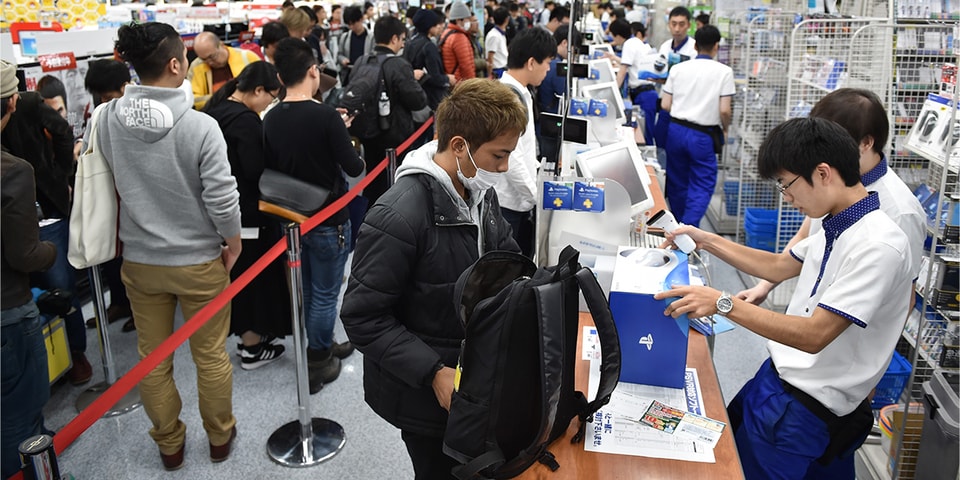
With the supply of the Sony PlayStation 5 still quite scarce all over the world, gamers in Tokyo jumped at a recent chance to get their hands on the next-gen console.
Earlier this week, Akihabara’s Yodobashi Camera, received a major shipment of PS5s that caused chaos to break out when released. Standing as one of the largest electronics stores in Japan, the sale saw an estimated 300 first come, first served ticket entries for a chance to purchase a PS5. With many people also joining the madness as the Akihabara location of Yodobashi Camera does not require customers to hold its black credit card to purchase the console, a requirement created to prohibit resellers.
The crowd that packed into the location began to push and shove forcing checkout counters and staff to be forced back. Ultimately, the local police were called and canceled the sale due to the aggressive nature that broke out amidst the state of emergency over the Coronavirus issued by the Japanese government.
Catch all the chaos over the Sony PlayStation 5 below.
They cancelled the sale due to people being insane!! Pushed so hard even the cash registers and staff went backwards. I’ve never seen that kind of insanity in japan before…