Tuesday, August 31, 2021

The Galaxy S21 will get Android 12 and One UI 4 in a September beta - Android Police

The Galaxy S21 will get Android 12 and One UI 4 in a September beta

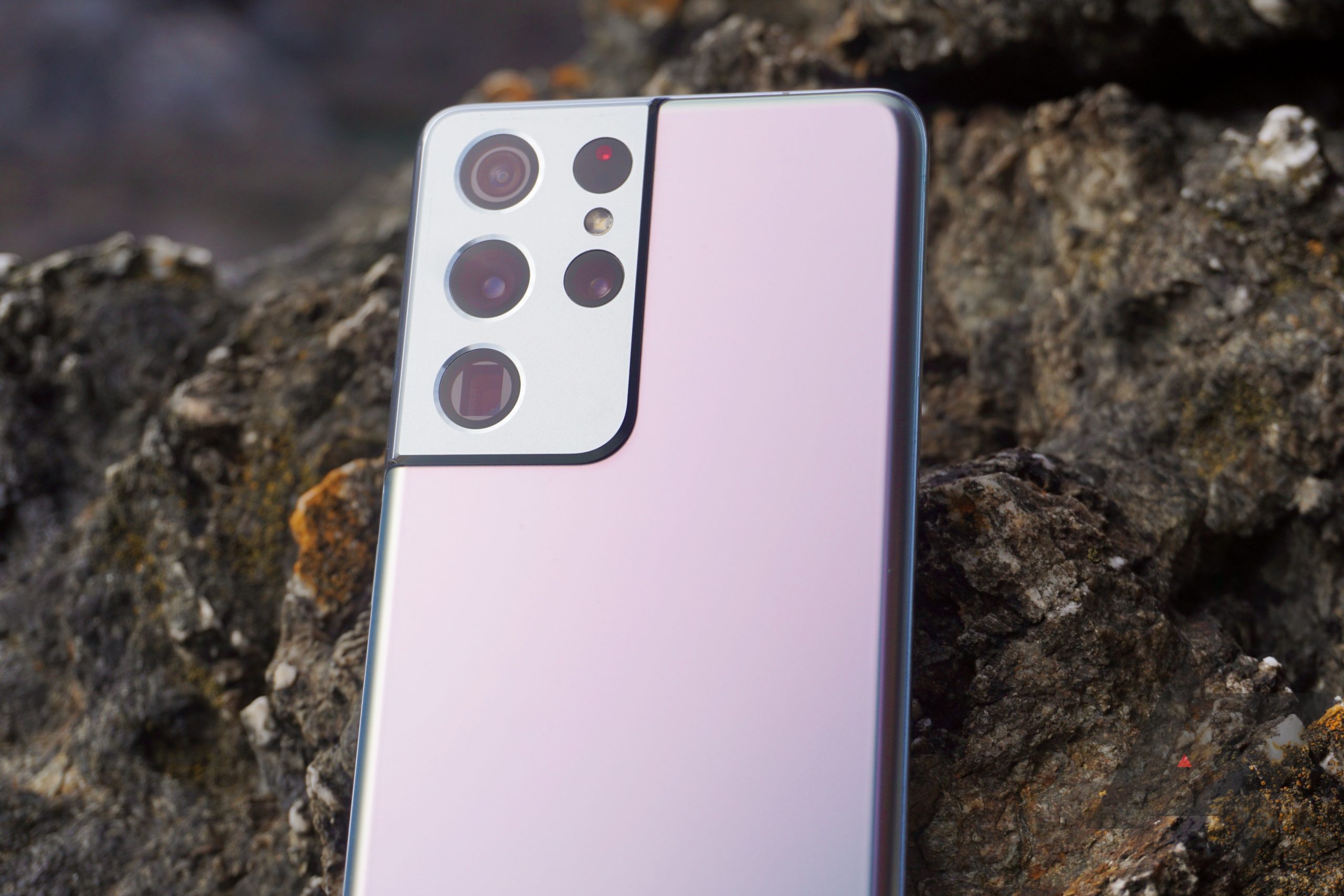
Many of us have been eagerly anticipating One UI 4, which will show us Samsung's take on Android 12. The company accidentally announced the beta early in July before pulling it and saying that we'd need to wait until September for more details. Now things are finally moving ahead, as the original announcement is reposted with more information.

As spotted by SamMobile, Samsung's beta operation manager has posted the One UI 4 beta announcement on the South Korean forums, confirming that the Galaxy S12 series should see the update sometime in September.

The announcement also includes the same promo image that was mistakenly posted in July. The general gist from this image is that the beta will be available for the S21 series regardless of whether it's unlocked or a carrier model. You'll need to open the Samsung Members app, look for the One UI 4 beta banner, and enroll to participate.

Samsung hasn't said which countries will get the beta, but usually, it hits South Korea first, with the US following a few days later and a European release one or two weeks after that. Until that rollout begins, it'll be a waiting game of closing and reopening the Samsung Members app several times an hour until we finally get what we want. Or am I the only one who does that?

One UI 4 is expected to bring a major design overhaul to Samsung's software experience, possibly mimicking Google's Material You color theme, and under the hood changes to improve performance and battery life. We'll know more once it's available, and of course, we'll be covering everything new in the next version of One UI.

  • Thanks:
  • Moshe

Adblock test (Why?)

Article From & Read More ( The Galaxy S21 will get Android 12 and One UI 4 in a September beta - Android Police )
https://ift.tt/38r76aD
Technology

Windows 11 launches October 5th, but will you upgrade? - Rock Paper Shotgun

Microsoft today announced plans to launch Windows 11 on October 5th, inviting us to a world of exciting new features like rounded corners and a new default desktop wallpaper. As new named versions of Windows goes, 11 seems a smaller upgrade than from, say, Windows 3.1 to Windows 95, or from Window 8 to straight-up not owning a PC at all. Still, it has a few handy features for gaming. And it will roll out as a free upgrade from 10, if you want it.

"The free upgrade to Windows 11 starts on October 5 and will be phased and measured with a focus on quality," Microsoft blogman Aaron Woodman explained. "Following the tremendous learnings from Windows 10, we want to make sure we’re providing you with the best possible experience. That means new eligible devices will be offered the upgrade first. The upgrade will then roll out over time to in-market devices based on intelligence models that consider hardware eligibility, reliability metrics, age of device and other factors that impact the upgrade experience. We expect all eligible devices to be offered the free upgrade to Windows 11 by mid-2022."

Big fan of the phrase "tremendous learnings." Just tremendous learnings, mate. But yes, when Microsoft deem your PC eligible, Windows Update will let you know.

Windows 11 does have different hardware requirements, particularly in requiring a Trusted Platform Module 2.0 chip. When I tried MS's doodad that checks if your PC can run Windows 11, I got a big no (though I understand fiddling with your BIOS might be fruitful). MS have updated the minimum system requirements since then, mind, and plan to update the Checker. Still, I'm in no hurry to switch. I'm not sure how much Windows 11 would benefit me until I buy new hardware.

One of the headline gaming features in W11 is Auto HDR. As seen on the new Xbox, it can add HDR support to older games (DX11 and up) which don't support that there fancy monitor stuff. I don't own an HDR monitor and don't intend to buy one, but maybe one day I will? Microsoft also tout faster loading times thanks to their DirectStorage tech, though it'll be coming to Windows 10 in a less-fast form too. Ah, I'll probably not switch until I get a new PC. Win10 works fine enough for me.

Sounds like the built-in Android app support won't be in at launch either. Woodman said, "We look forward to continuing our journey to bring Android apps to Windows 11 and the Microsoft Store through our collaboration with Amazon and Intel; this will start with a preview for Windows Insiders over the coming months."

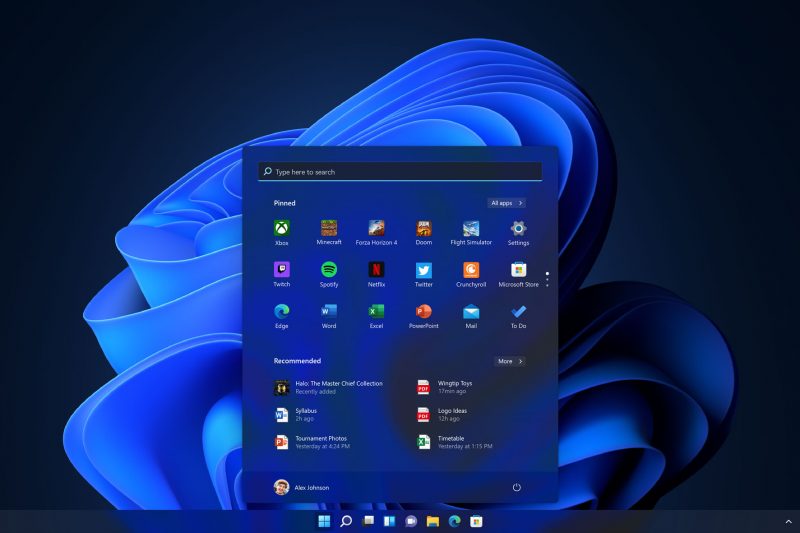
A screenshot of Windows 11's start menu in dark mode.
Big '90s Internet PhotoShop tutorial culture' vibes.

Our James is being won over by Windows 11's new UI, mind. "I particularly like the completely rejigged Start menu, which looks a lot better for making customisations without all the screen-hogging tiles that Windows has pushed since Windows 8," he said.

I will concede that I do like how the default wallpaper looks backgrounds I used on LiteStep in, like, 1998.

Microsoft plan to support Windows 10 through October 14th, 2025, so you won't instantly be cut off from updates if you choose not to upgrade. But eventually, years down the line, Windows 10 will likely become less safe to use thanks to unpatched security holes. You know, like how it only takes 13 seconds for a fresh Windows XP install connected to the Internet to start printing out pornography then fire up a botnet minting and selling NFTs of webcam photos of looking surprised by the obscenity pouring forth from your Epson Stylus Color 300.

Adblock test (Why?)

Article From & Read More ( Windows 11 launches October 5th, but will you upgrade? - Rock Paper Shotgun )
https://ift.tt/2WBM7Px
Technology

Exclusive: Google's new Pixel Stand for the Pixel 6 should support 23W fast wireless charging - Android Police

Exclusive: Google's new Pixel Stand for the Pixel 6 should support 23W fast wireless charging

For a few months now there have been rumors of a new Google Pixel Stand with a fan to keep it cool. This led to rumors about higher wattage wireless charging coming in this year's Pixel 6. Thanks to a US retailer, we were able to confirm that the Pixel Stand, and presumably Pixel 6, should support 23W wireless charging.

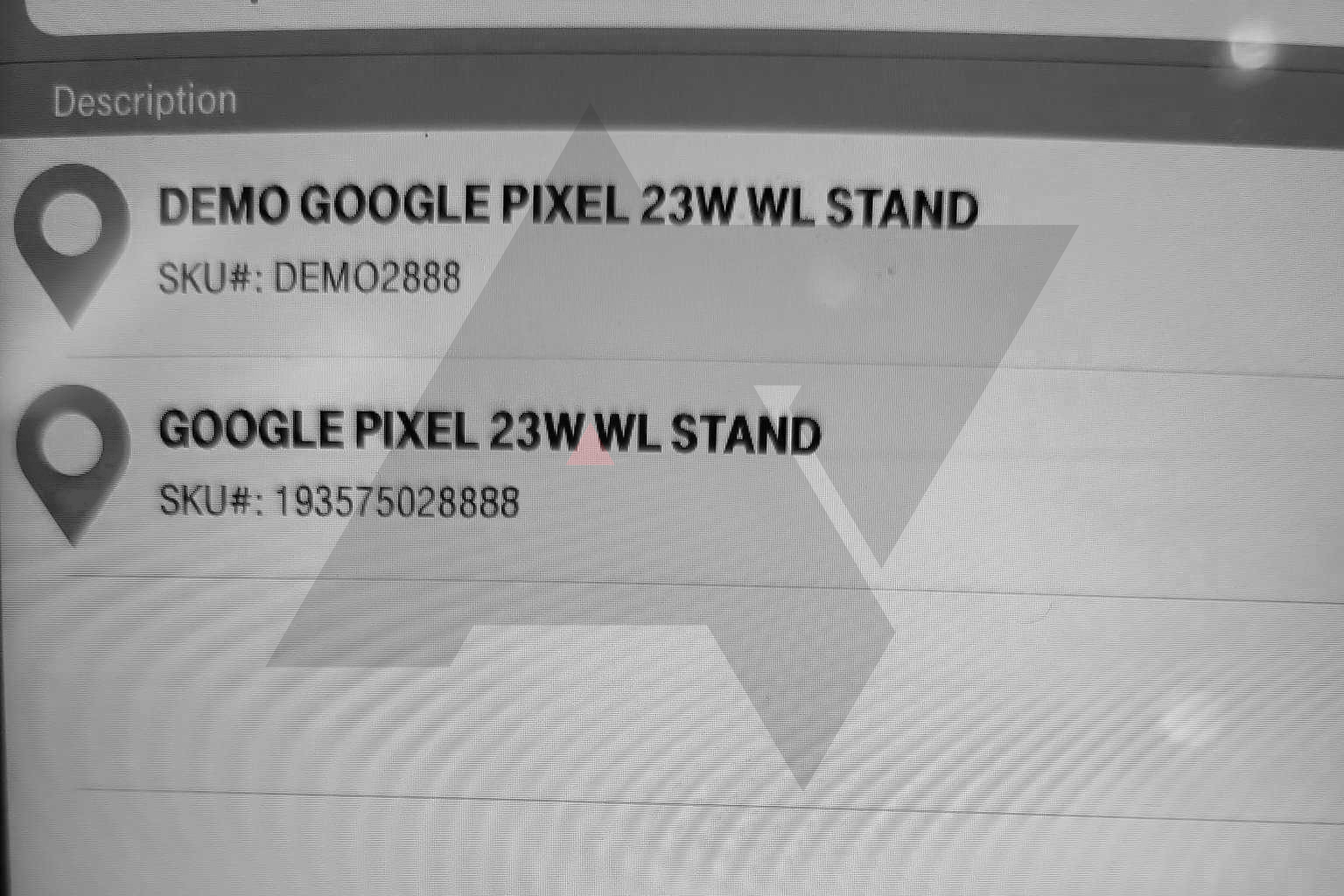
According to our retail sources, one of the major US carriers has already started to input accessories for the upcoming Google Pixel 6 series. One of these accessories happened to be the new Pixel wireless charger. The name in the system is "Google Pixel 23W WL Stand." There is a chance this is a mistake or typo, but that seems unlikely.

While we weren't able to get any other information, this does tell us Google is going to have the second-fastest wireless charging in the United States, overtaking Samsung and Apple's 15W wireless charging but still falling short of the OnePlus 50W charger. This is still faster than the original Pixel Stand, which maxed out at 10W on Pixel devices. We'll be able to see how it actually compares in real-world usage when the Pixel 6 is released later this fall.

Adblock test (Why?)

Article From & Read More ( Exclusive: Google's new Pixel Stand for the Pixel 6 should support 23W fast wireless charging - Android Police )
https://ift.tt/3kJtQbx
Technology

Nobody should buy the Galaxy Z Fold 3’s official S Pen Case - XDA Developers

The Galaxy Z Fold 3 is here, the newest premium foldable from Samsung. Perhaps you’ve even just received your shiny preorder device in the mail. The phone itself is great, definitely the best foldable yet. Samsung is also known for putting out a bevy of accessories with each flagship launch. In general, Samsung accessories tend to be well built with a number of useful features. At Samsung Unpacked, Samsung did unveil the S Pen Case for the Galaxy Z Fold 3, a flip case that not only protected the new foldable but also had a storage area for the S Pen Fold Edition. Unfortunately, this new Galaxy Z Fold 3 Flip Cover with S Pen is neither well-built nor useful.

z fold 3 case back view

The case itself looks decent enough out of the box. In fact, snapping the case on is fairly intuitive as well. If you view the case only from the back, it’s actually not that bad, albeit a little bulky for sure.

z fold 3 case side view with thickness

The textured material adds some grip to the Z Fold 3, which is nice for such an expensive device. You also get a sleeve for storing the S Pen, which is detachable should you want to use the S Pen without the case. All of these things sound great, so what’s the problem?

The issue lies with the front cover and the extra width needed for the S pen slot.

Cover Display issues

z fold 3 case peek view

My biggest concern is that the front of the flip cover will not close properly to fully protect the cover display on the Galaxy Z Fold 3. You can try to carefully slide the case over the edge of the phone’s cover screen, but it snaps back to a position where a small sliver of the screen remains exposed. The only way to keep the flip cover properly in place is to hold it there with your hand, obviously not practical or ideal on a daily basis. Some Reddit users mockingly suggested using a rubber band to hold the flip cover in place, which is an indication of the shortcoming of this $80 case. Surely Samsung could have engineered a better solution here? They made a really good pair of foldables after all, so this case is perplexing.

Folding the cover back reveals additional usability problems. When using the Galaxy Z Fold 3’s cover display, the flip cover adds considerable bulk and makes using the phone difficult when folded back. The edge of the cover is so wide that it protrudes from the rear of Fold 3’s cover display. One of the primary appeals of the cover display on the Z Fold 3 is for one-handed use, which this Flip cover makes very difficult.

z fold 3 case cover folded back

Unfolded issues

If you decide to unfold your Galaxy Z Fold 3, the Flip Cover with S Pen continues to make using the phone more difficult. The left edge of this case now sticks out from the left side of the Z Fold 3, making it incredibly difficult to use the phone, even with two hands! If you have a dominant left hand, single-hand use is practically impossible.

I would contend that this inconvenience takes away the appeal of having the S Pen stowed in the case. It’s awfully difficult to write with the S Pen in the unfolded orientation because you need to balance the case awkwardly in your other hand. The Flip Cover with S Pen also does not lay flat on a desk or table, so you can’t put it down to use the S Pen more reliably.

z fold 3 case unfolded and folded back

I’ve used a lot of Samsung cases over the years, for almost every flagship they’ve released. The Galaxy Z Fold 3 Flip Cover with S Pen is one of the worst designs I’ve ever seen. After using this case for a few days, my best advice is to remove the detachable S Pen silo and throw the case in the trash. You can find other better uses for your $80.

If you do need a case, these are some of the Best Galaxy Z Fold 3 cases, and we’ll be adding some S Pen storage cases as soon as we spot some good ones.

Adblock test (Why?)

Article From & Read More ( Nobody should buy the Galaxy Z Fold 3’s official S Pen Case - XDA Developers )
https://ift.tt/3Brrc0L
Technology

Apple Watch Series 7 reportedly facing production delays due to complex redesign - 9to5Mac

We’re anxiously waiting for Apple to announce the next iPhone event, but there’s news out of Nikkei Asia that could prove disappointing for Apple Watch customers. Citing sources familiar with Apple Watch Series 7 production, the outlet reports that the redesigned hardware (renders pictured above) is causing production delays ahead of launch. Apple typically releases major new updates to the Apple Watch in September (save for last year’s slight delay due to COVID).

Here’s what Nikkei has to say on the eve of September:

Production of the upcoming Apple Watch has been delayed in large part due to the complicated designs of the new smartwatch, Nikkei Asia has learned.

Manufacturers of Apple Watch 7, as the device is expected to be called, began small-scale production last week but encountered critical challenges in reaching satisfactory production performance, multiple people familiar with the situation said.

Three sources said the current disappointing production quality could be attributed to the complexity of design, which is significantly different from that of previous generations of the watch, and the assemblers found issues when putting together electronics modules, components and displays.

While it’s wild to think that Apple Watch Series 7 production only began in earnest last week, Apple does tend to crank up iPhone and Apple Watch production in August before a late September launch.

While it’s not stated in the report, it’s possible that this could mean the Apple Watch Series 7 is released after the iPhone 13. Apple has historically released updates to the Apple Watch alongside new iPhones. It’s also possible that supply could be severely constrained at launch for the redesigned model.

Nikkei goes on to say that production has actually been halted for the Apple Watch Series 7.

As a result, the production of the new watch has been temporarily halted as Apple and its suppliers try to sort out the problems and further certify the designs before going into mass production, four people said.

The next Apple Watch will come with new features such as blood pressure measurement, they said, which means production involves fitting a greater number of components into a similar size body. The new product must also meet requirements for water-resistance performance, further increasing the engineering and production challenges, the people said.

The new Apple Watch design is expected to dramatically change the shape of the casing to more align with the iPhone 12 and iPad Pro look. Apple’s latest devices including the newly designed iMac and rumored MacBook Pro update use a boxier design than the curved Apple Watches so far.

The display is also expected to be bumped slightly, possibly thanks to thinner bezels, with 40mm and 44mm becoming 41mm and 45mm, respectively.

Nikkei includes ongoing travel restrictions intended to limit the spread of COVID-19 as another factor cited by sources.

However, disruption from the COVID-19 pandemic has made it difficult for Apple and its suppliers to travel back and forth to verify the new specifications, making it hard to discover difficulties with the design until test production starts, two of the people said.

On a positive note, Nikkei includes in its reporting that the Apple Watch Series 7 is expected to debut blood pressure measurement functionality and a stronger water resistance rating.

Apple is expected to announce the annual iPhone event where Apple Watch is unveiled for a date as soon as September 14. The announcement could come on September 7 if rumors pan out this year.

Check out 9to5Mac on YouTube for more Apple news:

Adblock test (Why?)

Article From & Read More ( Apple Watch Series 7 reportedly facing production delays due to complex redesign - 9to5Mac )
https://ift.tt/2WGAIOP
Technology

The Galaxy Z Fold 3 Is Way More Durable Than Its Predecessors - Gizmodo

Image for article titled The Galaxy Z Fold 3 Is Way More Durable Than Its Predecessors
Photo: Sam Rutherford

When Samsung unveiled the Galaxy Z Fold 3, it made a point of emphasizing its improved durability. It’s far, far too early to know how the Z Fold 3 will hold up over time, but in a series of breakability tests, it seems Samsung’s durability claims aren’t just fluffy marketing.

Allstate Protection Plans (formerly SquareTrade) is infamous for its drop tests and its FoldBot. While we don’t know the final results of the FoldBot just yet, Allstate said “it proved to be extremely strong” and that there were few doubts that it would last 200,000 folds. The Z Fold 3 did, however, make serious strides in two drop tests and a dunk in the pool.

As a refresher, with the Z Fold 3, Samsung said it created a stronger frame with a material it dubs Armor Aluminum and Gorilla Glass Victus. It also has an IPX8 rating, making it the first Samsung foldable to offer any sort of water resistance. The main screen also has an additional panel layer and a better protective film, which Samsung says makes the Z Fold 3's screen 80% more durable than the Z Fold 2.

These are pretty big claims, but the results of Allstate’s breakability tests are encouraging. You can watch the video for yourself, but the DropBot dropped the $1,800 Z Fold 3 from six feet onto concrete. In the two drops where the phone was fully open, the screen didn’t shatter—a first for any smartphone. It only received minor pixel damage and scuffing. It didn’t fare so well when the phone was closed, however. In that test, the screen shattered with bits of glass coming loose. As for water resistance, the phone survived a 5-foot dunk in the pool for 30 minutes—which is exactly what its IPX8 rating promised.

Samsung has made significant strides in the durability of foldable phones since it first introduced the Galaxy Fold in 2019. “The Galaxy Z Fold3 is one of the toughest, most durable phones we’ve ever tested, and its interior screen is the first not to crack or shatter in our drop test,” Jason Siciliano, Allstate Protection Plan vice president of marketing and creative director, said in a statement.

This is an encouraging sign that Samsung’s latest foldable flagship should be able to better withstand the rough and tumble of daily life. However, these tests aren’t exactly a 1:1 mirror of how people actually handle their phones. (I don’t know about you, but I don’t climb up 6ft on a ladder and just... drop my phone face-down.) We also won’t know what sort of issues might pop up after months of long-term use. For instance, when we tested the Z Fold 2, we found that the screen became increasingly susceptible to tiny air bubbles over several months of daily use.

Also, improved durability doesn’t mean these phones are indestructible. Not only does the phone itself cost $1,800 to buy, but it also costs $479 to repair the main screen and $149 to repair the outer screen. So, uh, if you’re prone to accidents, you might still want to invest in a case.

Adblock test (Why?)

Article From & Read More ( The Galaxy Z Fold 3 Is Way More Durable Than Its Predecessors - Gizmodo )
https://ift.tt/3gOs6wB
Technology

Microsoft's first major operating system in 6 years, Windows 11, launches Oct. 5 - CNBC

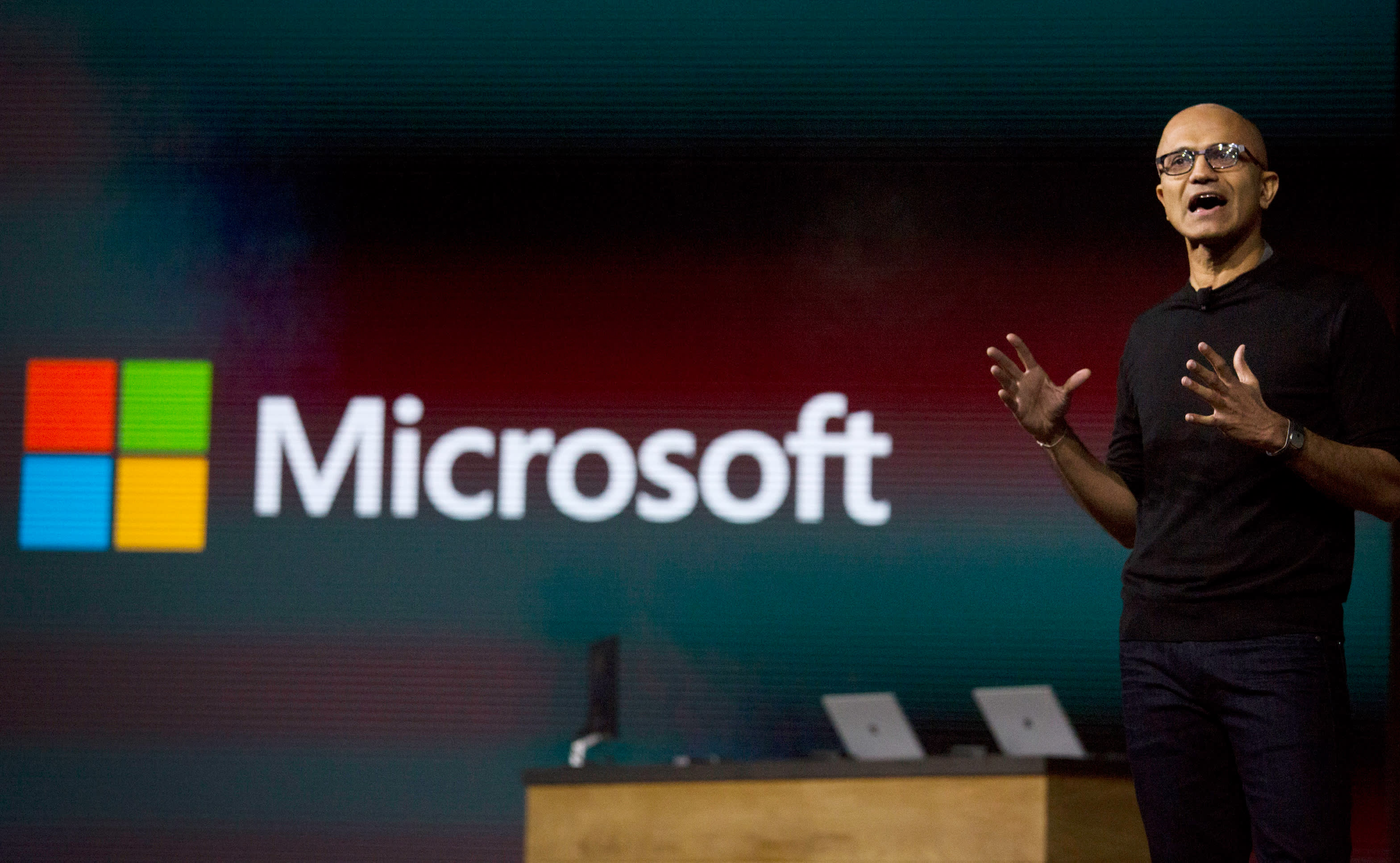
Satya Nadella, chief executive officer of Microsoft Corp., speaks during the Windows 10 Devices event in New York on Oct. 6, 2015. Microsoft Corp. introduced its first-ever laptop, three Lumia phones and a Surface Pro 4 tablet, the first indication of the company's revamped hardware strategy three months after saying it would scale back plans to make its own smartphones.
John Taggart | Bloomberg | Getty Images

Microsoft said Tuesday that it will start offering free upgrades to Windows 11, the next version of its desktop operating system, to eligible PCs on Oct. 5.

Windows, originally released in 1985, remains a key piece of Microsoft's business. In the second quarter Windows delivered $6.6 billion in revenue, representing 14% of the software and hardware company's total revenue. A successful release of Windows 11 could further secure the future of the franchise, which can also benefit other parts of Microsoft's business, such as Azure and Office.

As it has for past updates, Microsoft will use on-device data and other factors to determine which devices will get the offer to upgrade first, Aaron Woodman, general manager for Windows marketing, wrote in a blog post.

On PCs running Windows 10, that can can include the necessary components to run Windows 11, the Windows Update feature will notify people when the upgrade is available. People can also go to Settings > System > Windows Update to manually check if the upgrade is ready.

Woodman pointed to a variety of Windows 10 PCs that people can buy now and upgrade to Windows 11 later, including Dell's XPS 13, the HP Spectre x360 and Lenovo Yoga Slim 7i Pro, as well as Microsoft's own Surface Pro 7.

Windows 11 brings a modern look, with rounded corners and app icons displayed in the center of the taskbar. New sounds are designed to be less jarring. Microsoft redesigned the Start menu, the app store and the Settings app, and it's easier to arrange multiple app windows on screen. And Android apps will be available, by way of Amazon's Appstore. The refresh comes as Microsoft faces rising competition from Chromebooks running Google's Chrome OS, and Chromebooks are capable of running Android apps.

And Windows 11 will be going up against a popular release in the form of its predecessor. Microsoft released Windows 10 in 2015, making this the longest period of time a version of Windows has been in market before a replacement. It has become the world's most popular PC operating system, boasting 1.3 billion monthly active devices. Microsoft will continue to support Windows 10 through 2025, and the company suggests people stick with it if their PCs can't run Windows 11 and they don't want to buy a new PC.

On June 24, Microsoft announced Windows 11 as the successor to Windows 10 and made it available to testers enrolled in the Windows Insider program four days later. Since then, Microsoft has rolled out seven incremental updates containing feature changes and bug fixes. Now the company is preparing to make a final version Windows 11 available to many more customers and have device makers start selling new PCs that run the operating system.

Microsoft said last week that it will support Windows 11 when it's running on a variety of PC processors, including Intel chips manufactured as far back as 2016. The company expects all devices that meet the Windows 11 requirements to receive the free upgrade by the middle of 2022, Woodman wrote.

WATCH: How Microsoft is creating a new 'cloud PC category' with Windows 365

Adblock test (Why?)

Article From & Read More ( Microsoft's first major operating system in 6 years, Windows 11, launches Oct. 5 - CNBC )
https://ift.tt/3mOyTKg
Technology

Polaroid's Now+ connected camera comes with five clip-on lens filters - Engadget

Polaroid is adding to its line-up of products that mix retro looks with modern smarts. The new Polaroid Now+ is an analog camera with Bluetooth connectivity and five physical lens filters. It's the first time the company has included the latter out of the box. You can clip the filters on to the camera's lens to saturate or deepen the contrast of your photos, or add new effects like starburst, red vignette, and orange, blue and yellow colors.

The new camera, which is out today for $150, is essentially an updated version of last year's Polaroid Now. This time, there's a new Blue Gray colorway (alongside white and black) that ditches the company's rainbow-colored strip for a more muted look. Polaroid also integrated the camera’s light sensor into the lens stage to accommodate the different filters. On top of the core autofocus, dynamic flash, and self-timer functions, the snapper now comes with a tripod mount.

What's more, Polaroid has made way for improvements on the software side. The Polaroid Originals app now boasts a new, streamlined design with new features including aperture priority and tripod mode, designed to offer more control over depth of field and long exposures. You can also swipe between light painting, double exposure and manual mode. The Polaroid Now+ camera is available online exclusively through Polaroid.

All products recommended by Engadget are selected by our editorial team, independent of our parent company. Some of our stories include affiliate links. If you buy something through one of these links, we may earn an affiliate commission.

Adblock test (Why?)

Article From & Read More ( Polaroid's Now+ connected camera comes with five clip-on lens filters - Engadget )
https://ift.tt/3zzZzSB
Technology

Bose QuietComfort 45 Noise-Cancelling Headphones debut at $329 - AppleInsider

A successor to Bose's popular QC35, the highly anticipated QuietComfort 45 headphones offer enhanced acoustic noise-canceling technology and USB-C charging.

The headphones were first spotted at Adorama on Aug. 31, with a retail price tag of $329. At press time, shoppers can preorder the QuietComfort 45 headphones at the Bose dealer, with no official ship date included on the company's product page. According to Adorama, orders are shipped on a first-come, first-served basis, with free shipping on orders delivered within the contiguous U.S.

New to the QuietComfort 45 is USB-C charging, with up to 24 hours of play time on a single charge. The QC45 also offer improved voice pickup with the addition of a fourth microphone.

The synthetic leather earcup cushions and headband are designed to provide a premium feel in a competitive space that includes the popular Sony XM4 headphones and AirPods Max.

Two modes allow users to select between full noise-canceling (Quiet Mode) and hearing your environment and music at the same time (Aware Mode).

Stay tuned to AppleInsider for additional details once the Bose QuietComfort 45 headphones hit store shelves. If you want to get your hands on a pair of the QC45, Adorama is accepting preorders in both Black and White Smoke for $329.

Bose QuietComfort 45 Headphones Preorder

Adblock test (Why?)

Article From & Read More ( Bose QuietComfort 45 Noise-Cancelling Headphones debut at $329 - AppleInsider )
https://ift.tt/3gHTEDJ
Technology

Apple's rumored iPhone satellite support may be for emergency calls and messages - Engadget

The rumored satellite features for future iPhones are reserved for emergency uses only, according to Bloomberg's Mark Gurman. A few days ago, a report by well-known analyst Ming-Chi Kuo said the next iPhones will come with support for Low Earth Orbit satellite calls and messages. Gurman's sources said, however, that Apple isn't turning its devices into actual satellite phones, at least for now. Instead, the tech giant is reportedly developing at least two emergency-related features relying on satellite networks. 

The first feature is called Emergency Message via Satellite and will be added as a third protocol, alongside iMessage and SMS, to the Messages app. It's apparently codenamed Stewie inside the company and will allow users to text emergency services even when there's no signal, which sounds especially useful during emergencies in remote locations, such as mountains and forests.

The tool will also give users a way to text their emergency contacts simply by typing Emergency SOS in the recipient line. Messages will be restricted to a shorter length, but the senders' contacts will get a notification for them even if their phone is set to Do Not Disturb. Satellite messages will appear as gray bubbles instead of blue or green so they can be easily identified. Eventually, the feature could handle phone calls, as well.

Apple is also reportedly working on a second satellite feature that will allow users to report crisis situations like plane crashes and fires. This system will give users a way to report the incident at length and will ask them specifics, such as if anybody needs search-and-rescue services or if anybody in the vicinity is armed. It can also automatically send authorities the reporter's location and their details from the Health app, such as their medical history, age, medications and information like height and weight. The feature can also a notify the reporter's emergency contacts for them.

While both features sound useful, their availability is restricted by satellite location and reach. They might not work for some regions, and in some cases, users may have to walk outdoors in a certain direction where their iPhone can connect to a satellite. Also, Gurman's sources said it's unlikely that the features will be ready before the year ends, which means the next iPhones expected be announced sometime in September won't be able to send messages via satellite yet. 

All products recommended by Engadget are selected by our editorial team, independent of our parent company. Some of our stories include affiliate links. If you buy something through one of these links, we may earn an affiliate commission.

Adblock test (Why?)

Article From & Read More ( Apple's rumored iPhone satellite support may be for emergency calls and messages - Engadget )
https://ift.tt/3yyjVKy
Technology

Samsung’s new Galaxy Watch gets a walkie talkie feature of its own - The Verge

Samsung has released a new walkie talkie app for the Galaxy Watch 4 and Watch 4 Classic, which allows watch owners to have push-to-talk conversations with one another using the wearable. The app’s release was reported by XDA Developers, but its development was rumored in May by SamMobile prior to the watch’s official announcement. It’s available to download now via the Google Play Store.

The app’s release comes after Apple added a similar feature to its Apple Watch back in 2018 with WatchOS 5. But while Apple’s push-to-talk walkie talkie feature only lets two people communicate at once, Samsung’s supports “two or more users” by setting up a Walkie-Talkie channel to chat in. That is, so long as you can find enough people using the Wear OS 3-based Watch 4 and Watch 4 Classic, the only two wearables currently listed as compatible with the app on its Play Store listing.

Adblock test (Why?)

Article From & Read More ( Samsung’s new Galaxy Watch gets a walkie talkie feature of its own - The Verge )
https://ift.tt/3gN3Tq6
Technology

Google Calendar will break down how much of your work is spent in meetings - The Verge

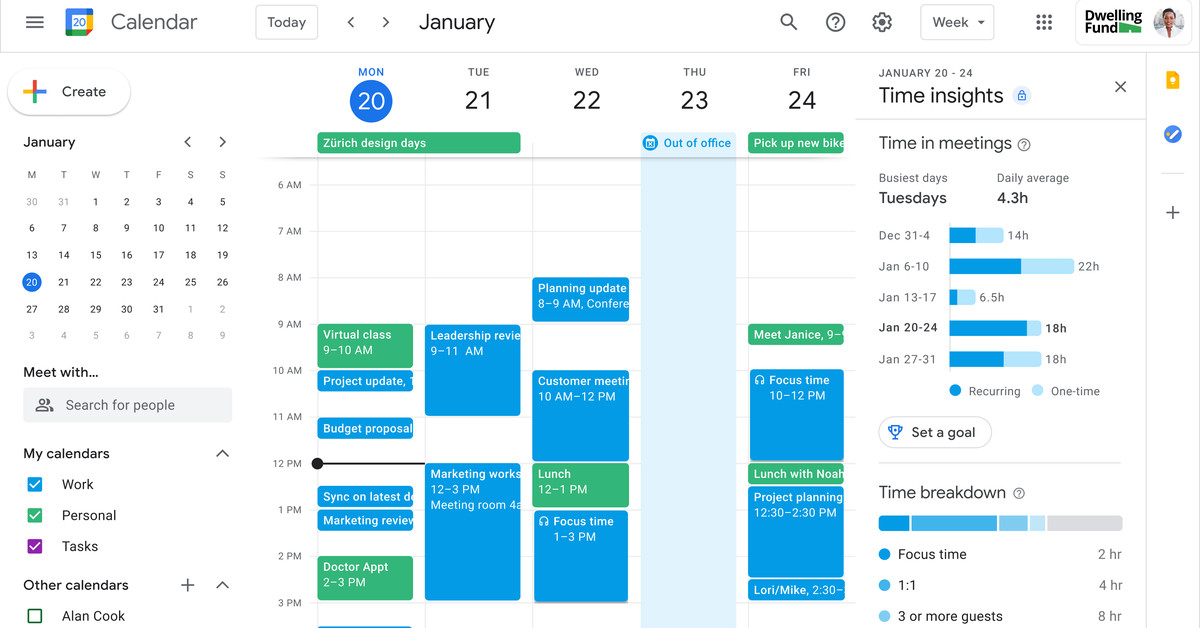
Google is adding a new “Time insights” panel to Calendar on the web, showing users how much of their working week is spent in meetings. According to Google’s blog post, the feature is rolling out gradually over the next month on select plans. It was first announced back in March as part of a raft of new features coming to Google Workspace.

Time Insights arrives a couple of years after both Google and Apple added similar breakdowns into Android and iOS respectively to show the amount of time spent using different apps. But while these OS features included the ability to set per-app time limits, Google Calendar won’t let you set similar boundaries on meetings. Instead, it provides you with the information you need to hopefully curb any meeting-obsessed colleagues.

A screenshot published by Google shows what kind of insights the panel will provide. Up top there’s a “Time breakdown” pie chart, showing how much of your working hours are spent in meetings, which is subdivided into meeting between just two people, versus bigger groups of three or more. Below there’s a snapshot of time spent in meetings on a week-to-week basis, as well as highlights of which days are busiest, and the average hours per day spent in them. Calendar entries where you’re the only attendee don’t count towards these meeting totals, Google notes in a support page.

Google emphasizes that “this information is visible to you, not your manager.” However, it adds that it might be possible to see another person’s breakdown if you have permission to manage their calendar. The feature will be on by default, and while it can be turned off by Workspace admins, it can only be minimized, not disabled, by end users.

Time insights is available for users on the Google Workspace Business Standard, Business Plus, Enterprise Standard, Enterprise Plus, Education Plus, and Nonprofits subscription tiers. However, it won’t be accessible for G Suite Basic and Business customers, or those on Google Workspace Essentials, Business Starter, Enterprise Essentials, Education Fundamentals, and Frontline tiers.

Adblock test (Why?)

Article From & Read More ( Google Calendar will break down how much of your work is spent in meetings - The Verge )
https://ift.tt/3gO5FYi
Technology

Monday, August 30, 2021

Bloomberg: Apple Working on Emergency Satellite Features for iPhones, 2021 Launch Unlikely - MacRumors

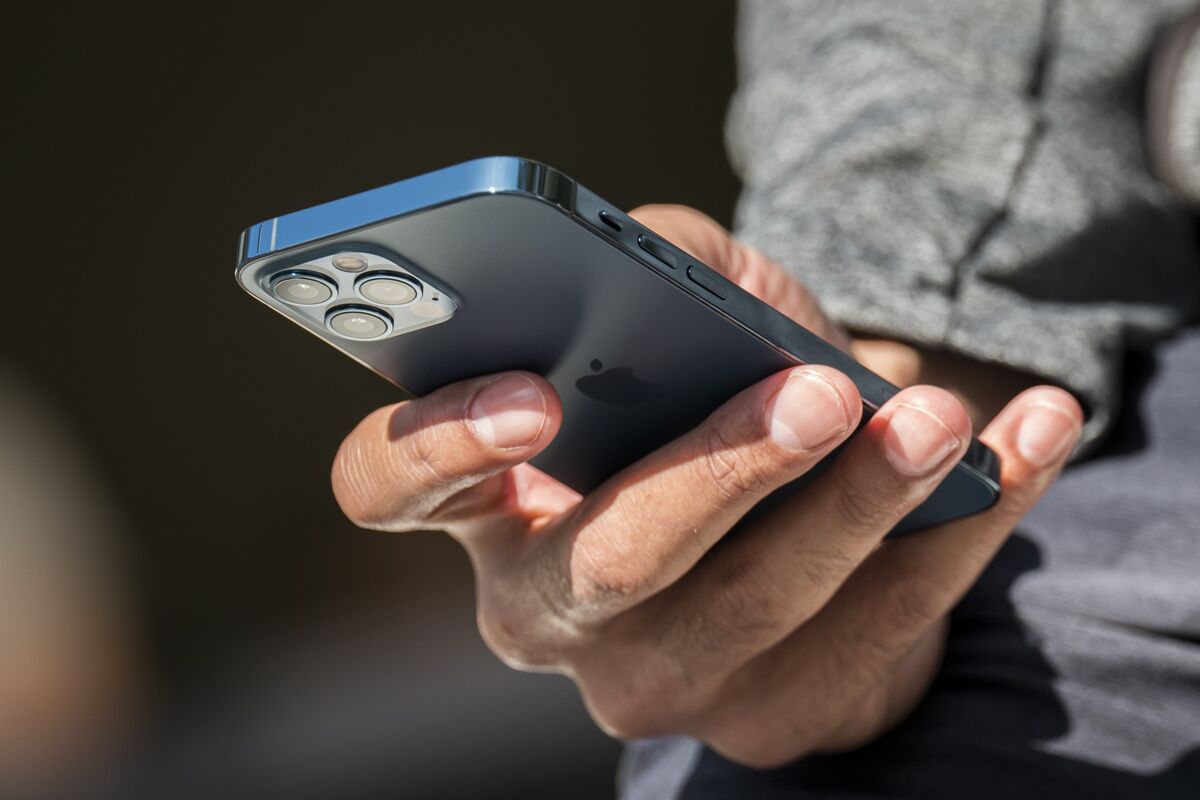
Apple is working on satellite capabilities for the iPhone that will allow users to send texts in emergency situations, reports Bloomberg. The feature would also allow ‌iPhone‌ users to report crashes and other emergencies in areas where there is no cellular coverage.

iPhone in Space
There are at least two emergency features that will rely on satellite networks, and while satellite technology has been in the works for years, these capabilities are not likely to launch in 2021.

The first feature, Emergency Message via Satellite, is designed to let users text emergency services and contacts using a satellite network when there is no signal available, and it will be integrated into the Messages app as a third communications protocol alongside SMS and iMessage. It will feature gray message bubbles rather than green or blue, and message length will be restricted.

The texting-via-satellite tool, codenamed Stewie inside Apple, will restrict messages to a shorter length. The texts will automatically push through to an emergency contact's phone, even if the do-not-disturb setting is on. One planned design will let a user send the message by typing "Emergency SOS" where they would usually input a contact name. In addition to delivering texts, the service may eventually be able to handle some phone calls too.

The second feature will let users report major emergencies like plane crashes and fires using satellite networks. It will be similar to a "911" call in the U.S. and can provide information like a user's location and medical ID, in addition to alerting emergency contacts.

A report over the weekend from Apple analyst Ming-Chi Kuo said that the iPhone 13 would include low earth orbit satellite communication connectivity to allow users to make calls and send messages without 4G and 5G coverage, but further analysis has indicated that this suggestion is incorrect and unlikely.

According to Bloomberg, when Apple does implement satellite connectivity, it will be limited to "crisis scenarios" and will not be an alternative to cellular networks that allows for widespread texting and calling.

Apple will not launch these satellite capabilities in every country, and their availability will be dependent on local regulations and satellite locations. One built-in feature will ask users to go outdoors and walk in a specified direction to help the ‌iPhone‌ connect to a satellite. Connections may not be instantaneous, and it could take up to a minute for an ‌iPhone‌ to successfully communicate with a satellite.

Connecting to satellites will require a special modem chip, and Apple will continue to use Qualcomm technology for the next few years. It is not clear if Apple will partner with Globalstar, as Kuo has suggested. Globalstar competitors Iridium Communications and Omnispace are not working with Apple, according to Bloomberg, but the report does not rule out Globalstar.

The satellite features are "unlikely to be ready before next year," though Apple's modem chips this year could "have the hardware needed for satellite communications." The functionality could be changed or scrapped prior to when Apple is planning to launch it and it has not yet been finalized.

Apple has considered launching its own satellites, but the planned emergency features will rely on existing networks.

Adblock test (Why?)

Article From & Read More ( Bloomberg: Apple Working on Emergency Satellite Features for iPhones, 2021 Launch Unlikely - MacRumors )
https://ift.tt/3zI6sBe
Technology

Google parodies Apple and Jony Ive in ridiculous Pixel 5a commercial - The Next Web

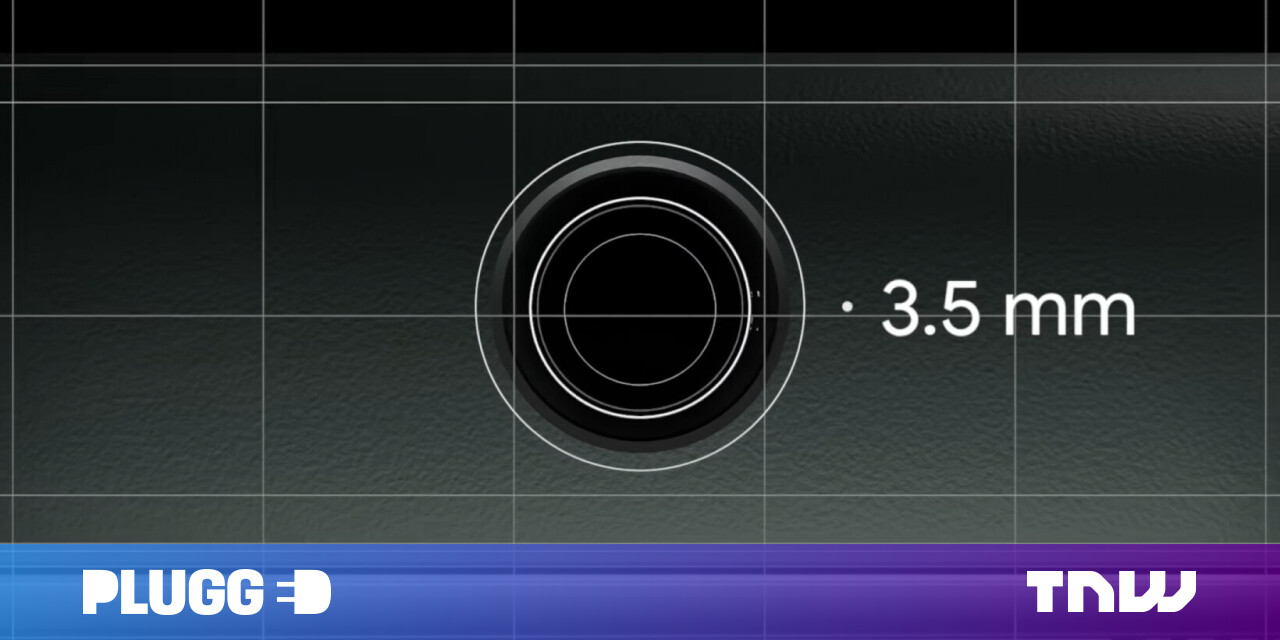
The Pixel 5a is a really good phone. It also happens to have a headphone jack.

Google really wants you to know this fact. I present to you the most passionate description of a 3.5mm orifice you’ll see today:

And I love every second of it. Strong Apple vibes. Can we get this Jony Ive impersonator to do every Pixel ad? Thanks.

That said, considering the Pixel 6 and 6 Pro probably won’t come with a headphone jack, this feels just a little ironic. But hey, marketing departments have gotta do their jobs.

Did you know we have a newsletter all about consumer tech? It’s called Plugged In – and you can subscribe to it right here.

Adblock test (Why?)

Article From & Read More ( Google parodies Apple and Jony Ive in ridiculous Pixel 5a commercial - The Next Web )
https://ift.tt/3yzyAVY
Technology

Apple's (AAPL) Future iPhones to Include Satellite Features - Bloomberg

Apple Inc.’s push to bring satellite capabilities to the iPhone will be focused on emergency situations, allowing users to send texts to first responders and report crashes in areas without cellular coverage. 

The company is developing at least two related emergency features that will rely on satellite networks, aiming to release them in future iPhones, according to a person with knowledge of the situation.

Adblock test (Why?)

Article From & Read More ( Apple's (AAPL) Future iPhones to Include Satellite Features - Bloomberg )
https://ift.tt/3t1NOlG
Technology

Chrome 94 beta tests some next-gen tech for gaming in your browser - The Verge

Google’s Chrome Beta 94 announcement mentions that Google is implementing some new web standards that could make browser-based gaming experiences even better. The soon-to-be-released WebCodecs could help make cloud gaming easier and faster, while the experimental WebGPU could make it easier for developers of games that run in the browser to tap into your computer’s power.

WebCodecs is an API designed to give developers better access to the video encoding/decoding codecs that are already bundled with your browser, which figure out what to do with video streams. While there are already methods of getting video to play in Chrome, they’re not necessarily designed for things like cloud gaming, which is best when it’s as low-latency as possible. WebCodecs is built to avoid overhead, making it easier to get the incoming video stream onto your screen as fast as possible, potentially with the help of hardware decoding. This will also, in theory, make it perform better than it currently does on slower machines (which are the kinds of computers where cloud gaming is most desirable anyhow).

The newer, more experimental WebGPU gives web developers better access to your computer’s graphics horsepower, by letting them hook into your computer’s native graphics API (similar to Apple’s Metal, Microsoft’s DirectX 12, or Vulkan). In simpler terms, it makes it easier for web developers to talk to your graphics card in a language it understands, without having to go through other layers that could slow things down. It’s meant to be a next-generation version of WebGL, which lets developers tap into the (now reasonably out of date) OpenGL framework. In the future, the tech should make it easier for developers to make graphically intense games that run in the browser, tapping into the full power of current-generation GPUs.

Both technologies have their place outside of gaming too. In a July 2020 talk, Google mentioned that Zoom was interested in using WebCodecs for videoconferencing, and WebGPU could be used to render 3D models in the browser or to accelerate machine learning models. It makes sense that they’d show up in Chrome, as these are all areas Google plays in, from cloud gaming with Google Stadia, to its own video conferencing apps. Both pieces of tech are open standards though, developed by the W3C, and other browser makers have begun testing them as well.

Of course, we probably won’t be seeing experiences powered by WebCodecs or WebGPU for a little while. While WebCodecs is actually getting close to release (it’s expected to be turned on by default in the upcoming Chrome 94), developers will still have to make their apps work with it. As for WebGPU, it’s currently in its experimental trial phase, which Google expects to end in early 2022. Whether it’ll end up as a feature at that point depends on how the trial goes, if the specification is done, and if enough people are interested in using it.

While these technologies may not make things that were impossible possible, they’re exciting nonetheless. When things are easier, or more flexible, it lowers the barrier of entry for developers. For gamers looking to play on the web, either through streaming or native games, the time developers save on figuring out how to get frames onto your screen is time they can spend making other parts of the experience better.

Adblock test (Why?)

Article From & Read More ( Chrome 94 beta tests some next-gen tech for gaming in your browser - The Verge )
https://ift.tt/2WCjyRW
Technology

Zoom announces first startups receiving funding from $100M investment fund - TechCrunch

For more than a year now, Zoom has been on a mission to transform from an application into a platform. To that end it made three announcements last year: Zoom Apps development tools, the Zoom Apps marketplace and a $100 million development fund to invest in some of the more promising startups building tools on top of their platform. Today, at the closing bell, the company announced it has made its first round of investments.

Ross Mayfield, product lead for Zoom Apps and integrations, spoke to TechCrunch about the round of investments. “We’re in the process of creating this ecosystem. We felt it important, particularly to focus on the seed stage and A stage of partnering with entrepreneurs to create great things on this platform. And I think what you see in the first batch of more than a dozen investments is representative of something that’s going to be a significant ongoing undertaking,” he explained.

He said while they aren’t announcing exact investment amounts, they are writing checks for between $250,000 and $2.5 million. They are teaming with other investment partners, rather than leading the rounds, but that doesn’t mean they aren’t working with these startups using internal resources for advice and executive backing, beyond the money.

“Every one of these investments has an executive or senior sponsor within the company. So there’s another person inside that knows the lay of the land, can help them advance and spend more personal time with them,” Mayfield said.

The company is also running several Zoom chat channels for the startups receiving investments to learn from one another and the Zoom Apps team. “We have a shared chat channel between the startup and my team. We have a channel called Announcements and a channel called Help, and another one that the startups created called Community,” he said.

Every week they use these channels to hold a developer office hour, a business office hour (which Mayfield runs) and a community hour, where the startups can gather and talk amongst themselves about whatever they want.

Among the specific categories receiving funding are collaboration and productivity, community and charity, DE&I and PeopleOps, and gaming and entertainment. In the collaboration and productivity category, Warmly is a sales tool that provides background and information about each person participating in the meeting ahead of time, while allowing the meeting organizer to create customized Zoom backgrounds for each event.

Another is Fathom, which alleviates the need to take notes during a meeting, but it’s more than recording and transcription. “It gives you this really simple interface where you can just tag moments. And then, as a result you have this transcript of the video recording, and you can click on those tagged moments as highlights, and then share a clip of the meeting highlights to Salesforce, Slack and other tools,” Mayfield said.

Pledge enables individuals or organizations to request and collect donations inside a Zoom meeting instantly, and Canvas is a hiring and interview tool that helps companies build diverse teams with data that helps them set and meet DEI goals.

These and the other companies represent the first tranche of investments from this fund, and Mayfield says the company intends to continue looking for startups using the Zoom platform to build their startup or integrate with Zoom.

He says that every company starts as a feature, then becomes a product and then aspires to be a line of products. The trick is getting there.  The goal of the investment program and the entire set of Zoom Apps tools is about helping these companies take the first step.

“The art of being an entrepreneur is working with that risk in the absence of resources and pushing at the frontier of what you know.” Zoom is trying to be a role model, a mentor and an investor on that journey.

Adblock test (Why?)

Article From & Read More ( Zoom announces first startups receiving funding from $100M investment fund - TechCrunch )
https://ift.tt/3Dq8PLz
Technology

The best DSLR cameras for beginners, according to professional photographers - CNN

CNN —  

If you’re a beginner photographer, you’re sure to have heard endless comments about DSLRs. The standard for professional photographers, digital single-lens reflex (DSLR for short) cameras deliver more detail than the camera on your phone. Plus a seemingly endless number of lenses, settings and accessories let you tailor make a camera to your precise wants and needs. Affording you the ability to capture a shot in any way you want.

If you’re considering buying a DSLR, whether it’s for yourself or someone else, just a heads up, they’re pricey. We’ll walk you through all the benefits of a DSLR, and to make sure you’re getting the best camera for you, we talked to multiple professional photographers to get their opinions on what to look for when buying a DSLR so you can decide what kind of DSLR is right for you.

What is a DSLR camera?

DSLR cameras are widely used in the professional world. Journalists and sports photographers trust them for catching crucial shots — but that doesn’t mean you have to be selling your shots to National Geographic to use one. They’re fantastic at snapping the perfect family portrait and if photography is your hobby, a DSLR can truly help you step your game up.

Shawn Connell is a professional photographer that shoots weddings, fine art collections and even takes underwater pictures of whales. He uses DSLR cameras all the time and praises their high-quality results. “You want a DSLR if you want to have more control over your camera and the way images look, shooting in low light, pretty much if you have an interest in getting better photos.”

Okay, so DSLRs are great, but what exactly are they? Let’s break it down. A DSLR has a mirror inside its body that reflects the image coming through the lens into a viewfinder. You can look through this viewfinder to see what you’re shooting in real time, so you can adjust all of your elements such as frame, focus and much more. As the light passes from the mirror to the viewfinder, it goes through a prism or another set of mirrors that creates the image. When you’re ready to take the shot, the mirror flips up in the blink of an eye to expose the sensor and take the picture. That satisfying kerchunk you associate with big cameras? That’s this process.

DSLRs also allow you to switch different lenses in and out, so you can capture any shot. From a macro lens for pictures of objects up close with tremendous detail, to a super wide lens to capture an entire mountain range, to a super telephoto to zoom in ridiculous distances; all is possible with a DSLR. However, lenses can also be incredibly expensive so make sure to either know what you want to shoot to buy an appropriate lens, or get a versatile lens that can perform in different situations.

One other important aspect is where the images or videos are saved. While point-and-shoots typically have internal storage, most DSLRs don’t come with this feature. Instead, you’ll need to use an SD card or a microSD card in an SD card adapter to save images and videos.

Mirrorless camera vs. DSLR

Another popular form of camera is the mirrorless camera. They’re very similar to the DSLR but, as the name suggests, they don’t have a mirror inside. This means these cameras are smaller than DSLRs and you don’t get that classic kerchunk. While you might miss the meaty, mechanical sound in some situations, in others it can be quite bothersome. If you’re taking a picture somewhere it needs to be quiet, such as at a golf tournament or when you’re in nature, a mirrorless camera’s lack of noise can be a big plus.

Siddhardha Garige is a full-time engineer who’s also been shooting professional photography on and off for 10 years. He focuses on taking pictures of large mammals, including elk, birds and polar bears in the Arctic. Garige currently uses a Sony mirrorless setup, and says they are more or less on equal ground with DSLRs. “DSLRs [are] getting replaced more and more by mirrorless cameras in today’s market,” Garige says. “Everything that is applicable to DSLRs is also applicable to mirrorless cameras.”

Since there are no mirrors in mirrorless cameras, and the light gets exposed right to the sensor, there’s no optical viewfinder. Instead, mirrorless cameras show you the image on a digital screen on the body or through an electronic viewfinder. Some photographers prefer looking through the optical viewfinders of a DSLR to see what’s going on in real life over looking at an image on a screen as you would with a mirrorless. However, that screen allows you to see how settings like your exposure affect your image in real time.

There are pros and cons to both DSLRs and mirrorless cameras. DSLRs are the more established, traditional choice, but mirrorless models can go toe to toe with DSLRs in many, if not all, aspects. The decision on which to go with really comes down to you and what you’d prefer.

What to look for in a DSLR

If you are looking for a DSLR, there’s a couple of things to look out for. A couple of the important aspects to pay attention to are the number of megapixels and the sensor type. The combination of this is what determines the quality of your photo. The more megapixels there are, the sharper your image will be. Most basic models have around 24 megapixels or higher.

When it comes to sensors, Connell says beware of cameras that aren’t full frame. “Look for a DSLR with a full frame sensor (if a camera has a smaller sensor, any lens you put on it becomes cropped).” It can sometimes be hard to tell whether a camera has a full frame sensor or not. Canon calls its smaller framed sensor APS-C and at Nikon they all fall under the Dx Series.

When a camera has a full frame sensor, that means that whatever you’re looking at through the lens is exactly what will be exposed to the sensor. With smaller sensors, you get what’s called the cropping affect, which can actually crop out some of the image you’re seeing through the viewfinder, which is a big downside when trying to get wide angle shots. The pixels on a full frame sensor will also be larger, allowing you to play with a shallower depth of field (think Portrait Mode to the max). However, full frame cameras are much more expensive than cropped frame ones.

You should also think about what kind of photos you want to shoot when considering sensor size. Sometimes you don’t need that wide angle, and a cropped frame can actually help you when you’re trying to zoom in over large distances. “A landscape photographer would prefer a full frame high resolution camera and a wildlife photographer would prefer a crop body sensor for more reach,” Garige says. “Know your needs and see which one fits your needs well.”

Garige and Connell both also suggest staying away from camera kits, which are cameras that come with a standard lens. “Spend extra money and get a decent lens,” Garige says. “Get lenses in focal range 24-105 and 70-300mm. These lenses should cover most of your needs and let you photograph everything from landscapes, people, streets, sports to wildlife.”

While buying a range of extra lenses will help up your shots, it can also be quite expensive. If you don’t want to push up your costs, or you don’t want to deal with finding a lens, camera kits are an easy way to get started. Oftentimes the kits include an extra battery and storage as well. We’ve listed out several cameras below that you can either buy with a kit lens, or just the body so you can find a higher-quality lens for yourself.

Above all, Connell recommends finding a camera that is easy to use. “I would look for a camera with a simple menu, easy controls,” he says. “Photography is about going out and taking photos — an easier camera to use will be more fun and result in being used more.” He also suggests finding a camera with two card slots, that way if one of your SD cards fails, you have another to back it up.

Garige echoes Connell and says finding a camera you like is the most important aspect. “For a beginner, choosing a DSLR is like choosing their first car,” Garige says. “Does not matter if it is [a] Honda Accord or Toyota Camry or Nissan Murano, they are equipped with identical specifications and take you from point A to point B… I suggest going to a local camera store and [picking] up a camera. See how it feels in your hand and [look] through [the] viewfinder.” Talking over your options with a local camera store can be an invaluable experience.

With tips from professional photographers in mind, we scoured the internet for the best DSLR cameras for beginners that fit the bill. Here’s what we found.

Best entry-level DSLRs

Nikon D3500 ($579.95; walmart.com or $596.95; bhphotovideo.com or $599.95; nikon.com)

Nikon D3500
B&H Photo Video
Nikon D3500

The D3500 from Nikon is one of the cheapest, most reliable cameras in the market. It’s not a full frame camera and comes with a kit lens, but it’s perfect for beginners with a sturdy build and intuitive interface. It’s a 24.2 megapixel camera with an ISO range of 100 to 25,600. Plus, it shoots video in full 1080p HD and is enabled with bluetooth. If you want a user-friendly experience and an upgrade from your smartphone but nothing too crazy, this camera is a solid pick.

Canon EOS Rebel T8i ($899.99; amazon.com, shop.usa.canon.com)

Canon EOS Rebel T8i
Canon EOS Rebel T8i

The 24.1 megapixel camera from Canon is another favorite beginner DSLR, though it’s a few hundred dollars more than the Nikon we already mentioned. Canon offers more features though – namely the ability to capture 4K video and use a 45-point autofocusing system. It’s a cropped frame camera, but it has built-in WiFi and Bluetooth capabilities so you can share your latest shots easily. You can buy the kit, or if you want to experiment and find your own lenses you can also purchase just the body for $749.99 at Canon.

Canon EOS Rebel SL3 ($699; adorama.com, shop.usa.canon.com)

Canon EOS Rebel SL3
Canon EOS Rebel SL3

Canon’s smallest and lightest DSLR camera, the EOS Rebel SL3 is a great option for someone who doesn’t want a massive camera around their neck all the time. Weighing in at a hair under one pound, it still packs a punch with a 24.1 megapixel sensor, 9-point autofocusing system and 4K video capabilities. The body is available for $599 at Adorama.

Pentax K-70 DSLR ($646.95; adorama.com, bhphotovideo.com, amazon.com)

Pentax K-70 DSLR
Pentax K-70 DSLR

What’s this? A camera that isn’t Canon or Nikon? That’s right, the big two aren’t the only dogs in town, and this DSLR from Pentax is surprisingly good. With a 24.2 megapixel, cropped frame sensor, image stabilization and more, it really gives the other cameras a run for their money. This Pentax K-70 is dust- and weather-resistant, and usable in conditions as cold as 14 degrees Fahrenheit, so you can take it on your most extreme adventures. The body alone is priced at $546.95 at Adorama.

Canon EOS 80D ($899, originally $1,249; bhphotovideo.com)

Canon EOS 80D
B&H Photo Video
Canon EOS 80D

This mid range DSLR from Canon is ultra responsive, has a 45-point system autofocus system and has an LCD screen that you can move around for easy viewing. It’s got a 24.2 megapixel sensor and 1080p video capabilities, making it the perfect option for someone who wants an entry-level camera that has a few more features than average. You can purchase this camera without the lens for $899, but getting the 18-55mm kit lens included is the same price.

Nikon D610 Digital SLR Camera ($798; walmart.com or $999.95; bhphotovideo.com)

Nikon D610 Digital SLR Camera
B&H Photo Video
Nikon D610 Digital SLR Camera

The first DSLR with a full frame sensor on our list, the D610 from Nikon is a beast of a camera. With 24.3 megapixels and that full frame we were talking about, you’ll be able to capture high-quality images with a wide dynamic range. It also has a 39-point autofocusing system to help you keep your subjects sharp and clear. Just note, this camera only comes with a body, so you’ll have to buy a separate lens. You can browse pairing options at B&H.

Canon EOS 6D Mark II DSLR ($1,399; amazon.com, shop.usa.canon.com, adorama.com)

Canon EOS 6D Mark II DSLR

This compact DSLR is another model with a full frame sensor. A huge step up from other entry-level cameras, but cheap as far as full frames go, this camera is a nice balance between top-tier performance and price. The 26.2 megapixel sensor helps the camera get outstanding images in low-light situations. The price featured is just for the camera body, so you’ll have to purchase a separate lens or snag a kit that includes one for $2,299.

Nikon D750 ($1,696.95; bhphotovideo.com or $1,699.95; nikon.com)

Nikon D750
B&H Photo Video
Nikon D750

Our last full frame DSLR, the D750 from Nikon features a tilting vari-angle display, a 24.3 megapixel sensor and can film in 1080p at 60 frames per second. It’s also WiFi-enabled, has an ISO range of 100-12,800 (expandable to 51,200) and is built with a slim, compact design so it’s not as cumbersome as some other high-end cameras. This price is for the body only, but right now you can get the body plus a 24-120mm lens for $2,196.95.

DSLR Lenses

If you opt for buying just a body, or want some extra options when you’re shooting, you’ll need to buy some lenses. We’ve compiled some of the most popular lenses that can capture nearly any moment. Just make sure to double check the lens will fit your camera, as different brands have different attachments.

Canon EF 50mm f/1.8 STM Lens ($125; amazon.com)

Canon EF 50mm f/1.8 STM Lens

If you want to try out another lens, there are tons available, but we like this 50mm from Canon. Connell says 50mm is the closest lens to the human eye, so you can have capture moments just as you see them.

Nikon AF-S NIKKOR 50mm f/1.8G Lens ($196.95, originally $216.95; bhphotovideo.com)

Nikon AF-S NIKKOR 50mm f/1.8G Lens
B&H Photo Video
Nikon AF-S NIKKOR 50mm f/1.8G Lens

Another 50mm lens, this time from Nikon, this is a great go-to option for beginners. It’s easy to use, works in lowlight and will help you get crisp photos in many situations.

Canon EF-S 24mm f/2.8 STM Lens ($149.99; bhphotovideo.com)

Canon EF-S 24mm f/2.8 STM Lens
B&H Photo Video
Canon EF-S 24mm f/2.8 STM Lens

This 24mm lens can help you take wide angle shots, so think landscapes and other situations where you’re trying to fit a lot of content into the frame.

Canon EF 85mm f/1.8 USM Lens ($419.99; bhphotovideo.com)

Canon EF 85mm f/1.8 USM Lens
B&H Photo Video
Canon EF 85mm f/1.8 USM Lens

85mm lenses are a must-have for portrait photographers, as it can easily get the bokeh effect, which is that blurring you see when you click Portrait Mode on your iPhone.

Nikon AF-S NIKKOR 85mm f/1.8G Lens ($476.95; bhphotovideo.com)

Nikon AF-S NIKKOR 85mm f/1.8G Lens
B&H Photo Video
Nikon AF-S NIKKOR 85mm f/1.8G Lens

For portrait-takers opting for a Nikon, you should consider this 85mm lens.

Nikon AF-S DX NIKKOR 35mm f/1.8G Lens ($176.95, originally $196.95; bhphotovideo.com)

Nikon AF-S DX NIKKOR 35mm f/1.8G Lens
B&H Photo Video
Nikon AF-S DX NIKKOR 35mm f/1.8G Lens

A 35 mm lens is also a good option to have in your kit, as it’s small and super versatile, allowing you to shoot nearly any situation.

DSLR camera accessories

There are a few accessories you might want when you buy a new DSLR. The most obvious would be extra SD cards, batteries and maybe a tripod, but DSLRs have tons of inputs so you can add mics, extra flash and much more.

Joby GorillaPod Tripod ($69.94, originally $89.95; amazon.com)

Joby GorillaPod Tripod

This lightweight and flexible tripod is a fantastic option for uneven ground, and its bendable joints can even wrap around a pole so you can suspend your DSLR in the air.

AmazonBasics 60-Inch Lightweight Tripod with Bag ($23.80, originally $27.99; amazon.com)

AmazonBasics 60-Inch Lightweight Tripod with Bag

If you want a more basic tripod, this 60-inch option from Amazon will do the trick. It also includes a carrying bag for added convenience.

Manfrotto Compact Aluminum Monopod Advanced ($39.88; bhphotovideo.com)

Manfrotto Compact Aluminum Monopod
B&H Photo Video
Manfrotto Compact Aluminum Monopod

If you want ultimate portability, this compact monopod from Manfrotto is your best bet. It slides down to 16.3 inches and weighs only 12.3 ounces. And it can support cameras up to 8.8 pounds, so it should be able to handle most setups but make sure to double check the weight of your camera and lens before trusting it with your valuable gear.

Oben CTM-2600 6-Section Carbon Fiber Monopod ($94.95; bhphotovideo.com)

Oben CTM-2600 6-Section Carbon Fiber Monopod
B&H Photo Video
Oben CTM-2600 6-Section Carbon Fiber Monopod

This six-section monopod can handle loads up to 26 pounds, so you can throw your full setup without a worry.

SanDisk Extreme Pro CompactFlash Memory Card 32 GB ($37.99, originally $49; amazon.com)

SanDisk Extreme Pro CompactFlash Memory Card 32 GB

At 32 GB, these memory cards have a solid amount of space. You can buy smaller or larger options from SanDisk as well, but remember, Connell recommends doubling up so you never lose any of your work.

Canon Battery Pack LP-E6N ($80; shop.usa.canon.com)

Canon Battery Pack LP-E6N

There’s nothing worse than your camera dying before you’re finished taking photos. Extend its battery life with this extra pack.

Nikon EN-EL15b Rechargeable Lithium-Ion Battery ($56.95; bhphotovideo.com)

Nikon EN-EL15b Rechargeable Lithium-Ion Battery
B&H Photo Video
Nikon EN-EL15b Rechargeable Lithium-Ion Battery

This battery will keep your Nikon charged up and ready to go. An extra battery never hurt.

Canon 200ES EOS DSLR Camera Gadget Bag ($28.49; amazon.com)

Canon 200ES EOS DSLR Camera Gadget Bag

Stash all your gear in this Canon camera bag. It’s got tons of pockets and easy access sections so you can store your camera body, extra lenses, batteries and more.

Nikon 25395 MC-DC2 Remote Release Cord ($26.95, originally $35.50; amazon.com)

Nikon 25395 MC-DC2 Remote Release Cord

If you’re shooting wildlife with a big telephoto lens, or maybe you’re trying to take a photo with a long exposure, you’ll need this remote release cord. It replicates the camera’s shutter button so you won’t accidentally shake the camera when trying to do it yourself.

Rode VideoMicro Ultracompact Camera-Mount Shotgun Microphone ($59; bhphotovideo.com)

Rode VideoMicro Ultracompact Camera-Mount Shotgun Microphone
B&H Photo Video
Rode VideoMicro Ultracompact Camera-Mount Shotgun Microphone

If you want to capture crisp audio along with your video, you’ll need a microphone. This low-cost and compact option is great for having on hand at all times.

Rode VideoMic Pro Camera-Mount Shotgun Microphone ($229; bhphotovideo.com)

Rode VideoMic Pro Camera-Mount Shotgun Microphone
B&H Photo Video
Rode VideoMic Pro Camera-Mount Shotgun Microphone

If you want some higher quality audio, check out this shotgun microphone from Rode. It’s ideal for journalists, vloggers, budget filmmakers and anyone who wants a portable yet high-caliber microphone.

Neewer 750II TTL Flash for Nikon DSLR Cameras ($70.99; bhphotovideo.com)

Neewer 750II TTL Flash for Nikon DSLR Cameras
B&H Photo Video
Neewer 750II TTL Flash for Nikon DSLR Cameras

If you need some extra flash for low light situations, check out this attachment for Nikon cameras.

Godox VING V860IIC TTL Li-Ion Flash Kit for Canon Cameras ($179; bhphotovideo.com)

Godox VING V860IIC TTL Li-Ion Flash Kit for Canon Cameras
B&H Photo Video
Godox VING V860IIC TTL Li-Ion Flash Kit for Canon Cameras

And for Canon cameras, this flash attachment will give you bright light so you can get your perfect exposure.

Adblock test (Why?)

Article From & Read More ( The best DSLR cameras for beginners, according to professional photographers - CNN )
https://ift.tt/38Ffxzf
Technology